
Doval and Wang Complete 25th India-China Boundary Talks in Beijing
National Security Advisor Ajit Doval and Chinese Foreign Minister Wang Yi held the 25th round of Special Representatives talks on the boundary question. Both sides linked border peace to broader normalisation of ties ahead of the September BRICS summit in New Delhi.

Beijing3 min read
Last updated
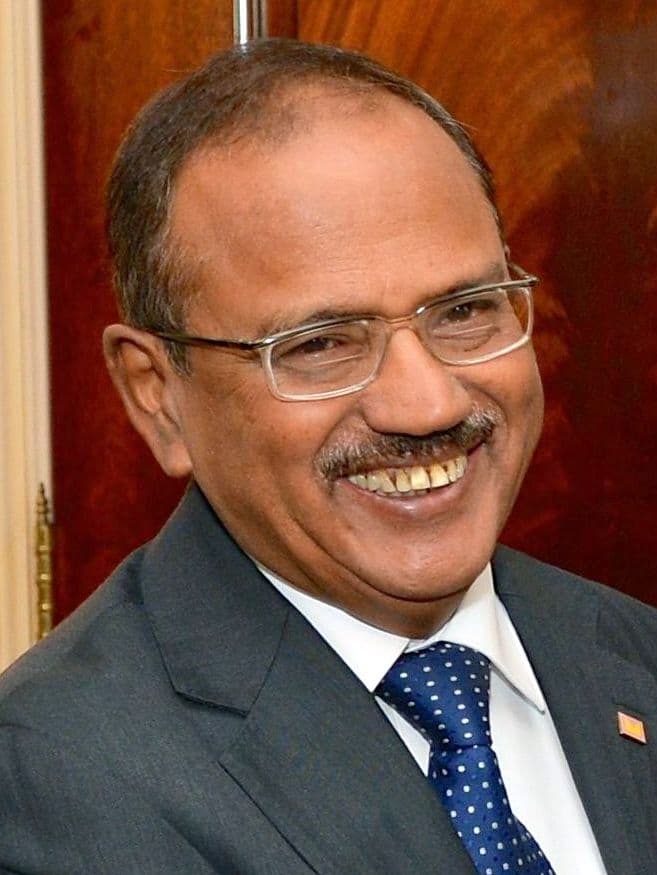
National Security Advisor Ajit Doval and Chinese Foreign Minister Wang Yi completed the 25th round of Special Representatives talks on the India-China boundary question in Beijing on 25 August 2026.
The discussions followed a separate meeting earlier that day between Doval and Chinese Vice President Han Zheng. Both encounters focused on maintaining peace and tranquillity along the 3,488-kilometre disputed border and on expanding engagement in economic, political and multilateral areas.
Doval told the Chinese side that the normalcy seen in bilateral relations over the past year is a direct result of both countries keeping the border quiet. "The normalcy we have witnessed in our relationship has been a direct result of both sides maintaining peace and tranquillity in the border areas," he said according to Indian briefings. He added that the two sides had spoken at length about how to reinforce those arrangements.
Wang Yi described the talks as in-depth and candid. Chinese statements said the two Special Representatives reviewed progress on boundary delimitation negotiations, border management mechanisms and cross-border cooperation. They restated their commitment to a fair, reasonable and mutually acceptable package settlement based on the political guiding principles agreed in 2005.
The Special Representatives mechanism was set up in 2003. Doval and Wang are the current designated representatives. The previous round took place earlier in the year; the two men also met in New Delhi in June on the sidelines of a BRICS National Security Advisers meeting.
Han Zheng told Doval that China and India should handle relations from a strategic and long-term perspective and implement the consensus reached by their leaders. The Indian Embassy in Beijing reported that the conversation covered strengthening border peace and improving ties across multiple fields in line with guidance from Prime Minister Narendra Modi and President Xi Jinping.
Those leaders met in Kazan in October 2024 and again in Tianjin. Indian officials have described the direction they set as clear and positive. Xi is widely expected to travel to New Delhi for the BRICS summit scheduled for 12-13 September 2026, his first visit to India in seven years. The Beijing talks therefore served as a stock-taking exercise before that possible high-level engagement.
Since the military standoff in eastern Ladakh that began in 2020, both countries have gradually restored diplomatic and economic contacts while keeping large numbers of troops forward-deployed. Indian briefings continue to link any further expansion of cooperation to sustained calm on the Line of Actual Control. Chinese statements emphasise the need to place the boundary question in the proper context of the overall relationship.
No joint statement detailing new agreements was issued immediately after the talks. Chinese media reported that the two sides agreed to hold the 26th round in India in 2027. Indian sources confirmed the discussions covered practical steps to consolidate existing confidence-building measures.
The boundary dispute remains unresolved. China continues to claim Arunachal Pradesh as South Tibet; India rejects that claim. Patrolling arrangements and disengagement understandings reached after the 2020 crisis are still monitored closely by both military commands.
For New Delhi the talks form part of a broader diplomatic sequence that includes recent meetings with Russian officials and preparations for the BRICS gathering. For Beijing they offer an opportunity to stabilise the southern frontier while managing other external pressures.
Whether the 25th round produces measurable changes in force posture or trade volumes will become clearer in the weeks leading to the September summit. What both sides have restated is that border peace remains the foundation on which any further normalisation rests.
Continue reading
 News
NewsUS Prepares Largest Mass Visa Revocation Targeting Up to 200,000 Asylum Seekers
Almanaque Digital DeskWashington
- News
Haiti Gang Attack Leaves 47 Dead and More Than 50 Kidnapped
Almanaque Digital DeskPort-au-Prince
- News
NIA Conducts Searches in Five States Over Cyber Attacks Linked to Operation Sindoor
Almanaque Digital Desk