Xi leaves Egypt after a 48-hour visit and a pitch to rewrite Middle East security
The Chinese president’s first trip to Cairo in a decade produced a Suez industrial-zone expansion, more than 20 cooperation papers and a call for regional states to reject “external interference.”

Cairo3 min read
Last updated
Chinese President Xi Jinping left Cairo on 2 September after a 48-hour state visit, his first trip to Egypt in a decade. He held talks with President Abdel Fattah El-Sisi, toured the Grand Egyptian Museum with both first ladies, and signed a joint statement that deepens the two countries’ comprehensive strategic partnership.
The visit marked 70 years of diplomatic relations. Xi flew in from the Shanghai Cooperation Organization summit in Kyrgyzstan. Sisi met him at Cairo International Airport on 1 September and again at Ittihadiya Palace the next morning with a 21-gun salute. In a signed article published in Egyptian papers before he landed, Xi quoted a local proverb: once you drink from the Nile, you are destined to return.
The political language was pointed. According to Xinhua, Xi told Sisi that the people of the Middle East should be “masters of their own affairs,” that “external interference” should be opposed, and that regional states should build a new security architecture based on “common, comprehensive, cooperative and sustainable security.” He offered Chinese help to protect shipping lanes. The Strait of Hormuz and the Bab al-Mandeb have both been disrupted by the current US-Iran war. Egypt sits on the third artery, the Suez Canal.
Sisi’s office said both leaders called for diplomatic solutions and a comprehensive agreement to end that war. The joint statement also recorded Chinese support for Egypt’s right to protect its water security, a reference to the long dispute over the Nile and the Grand Ethiopian Renaissance Dam.
The commercial annex is larger than the communique. Officials said the two sides launched the third phase of the China-Egypt industrial zone in the Suez Canal area. The zone already hosts about 200 companies and some $4 billion of investment. More than 20 documents were signed covering Belt and Road projects, artificial intelligence, trade, industrial supply chains, the digital economy, science, education and transport.
Trade numbers give the trip a base. Egypt’s statistical agency CAPMAS said Egyptian exports to China rose about 200 percent year on year in the first half of 2026, to $840.8 million from $280.5 million a year earlier. That is still a small share of China’s import bill, but it is a sharp move for Cairo.
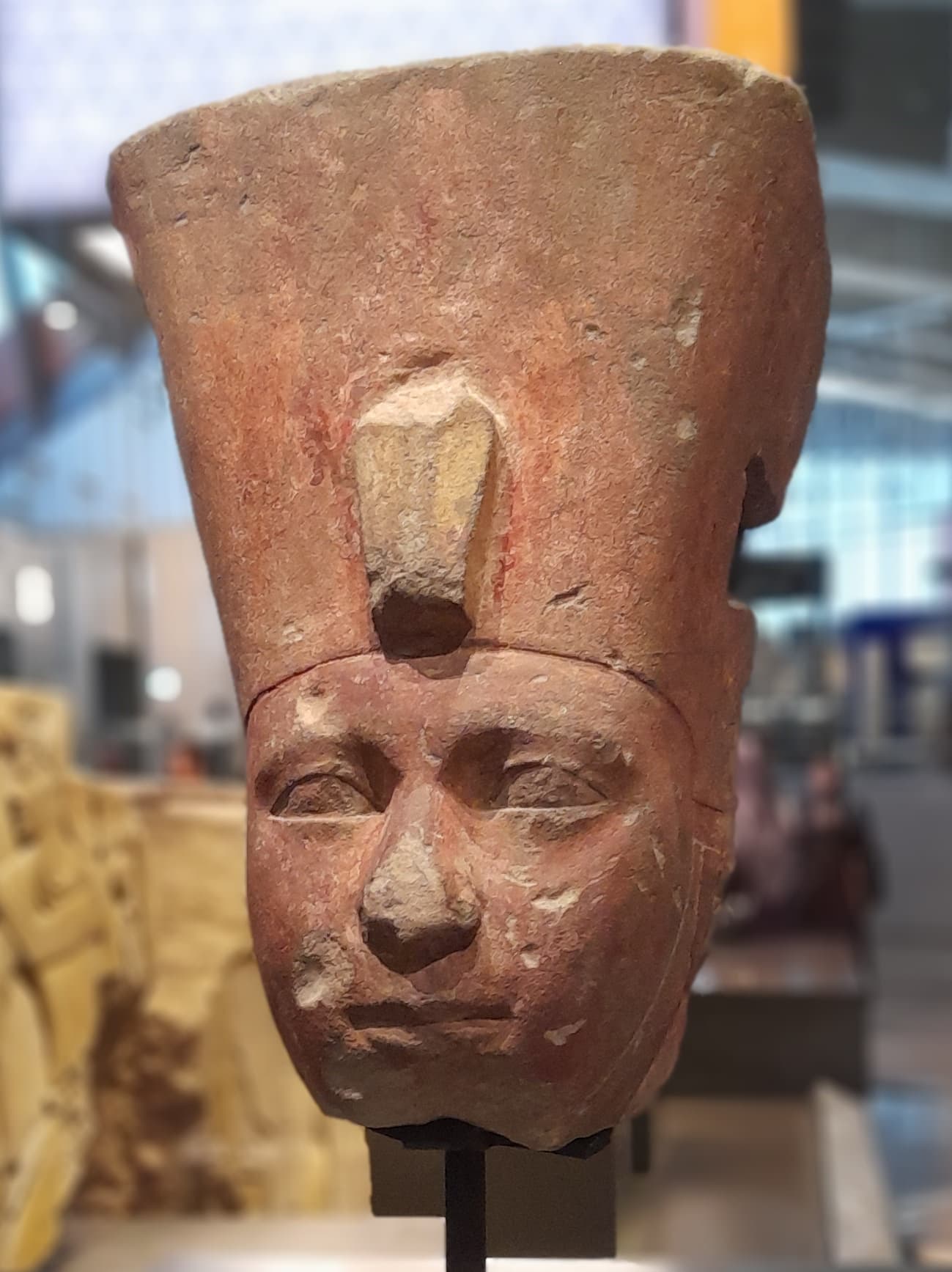
The museum visit was staged as civilisational diplomacy. Xi and Peng Liyuan, with Sisi and Entissar El-Sisi, walked the Grand Staircase, looked out at the pyramids from the observation deck, and stood in front of Tutankhamun’s mask, throne and chariots. Xi said the two countries should apply his Global Civilization Initiative. Sisi thanked him for congratulating Egypt on the museum’s opening last year.
Beijing is trying to hold two lines at once. It wants more physical presence on the canal while American and Iranian forces contest the Gulf. It also wants to present China as a partner that does not lecture Arab governments about their internal politics. Egypt, for its part, wants capital, industrial plants and a veto-wielding friend at the United Nations while it manages a war on its eastern approaches and a water dispute to the south.
No new military basing deal was announced. The papers that were signed are industrial and technical. The political signal is still the one that will be read in Washington, Tehran and Riyadh: China is back on the Nile, and it is talking about who should police the sea lanes. Whether that language becomes an actual architecture will be tested on the water, not in the museum hall.
