US strikes IRGC sites around Hormuz after two tankers are hit
CENTCOM said aircraft began hitting Revolutionary Guard targets at noon Eastern on 1 September. Iranian state media reported explosions on Qeshm Island, at Bandar Abbas and in Chabahar. A Saudi-flagged tanker and a South Korean-owned tanker had been struck the night before.

Strait of Hormuz4 min read
Last updated
U.S. Central Command posted at 12:00 p.m. Eastern on Tuesday, 1 September, that American forces had begun striking Islamic Revolutionary Guard Corps targets in Iran. The statement tied the raid to attempted IRGC attacks on commercial shipping in the Strait of Hormuz and on American service members in the region. It was the second acknowledged U.S. strike on Iranian soil in three days.
Iranian state television said explosions were heard on Qeshm Island, on the northern side of the strait. Nour News, which is close to the Supreme National Security Council, reported blasts in the port city of Bandar Abbas and in Chabahar on the southern coast. State television later said a fishmeal factory on Qeshm and a fishing pier and a Ports and Maritime Organization tower in Sirik were among the sites hit. Those civilian descriptions have not been independently confirmed. Iran's Armed Forces General Staff said the armed forces would deliver what it called crushing blows against the United States.
The Monday tanker hits
The Tuesday raid followed two tanker attacks on Monday evening. Greece-based maritime risk group Marisks said a Saudi-flagged crude tanker and a South Korean-owned tanker were struck by projectiles minutes apart while leaving the Persian Gulf on the southern shipping lane. The United Kingdom Marine Trade Operations centre separately logged an incident 17 nautical miles east of Khasab, Oman, in which a tanker reported three unknown projectiles during an outbound transit. UKMTO said no casualties and no environmental release were reported.
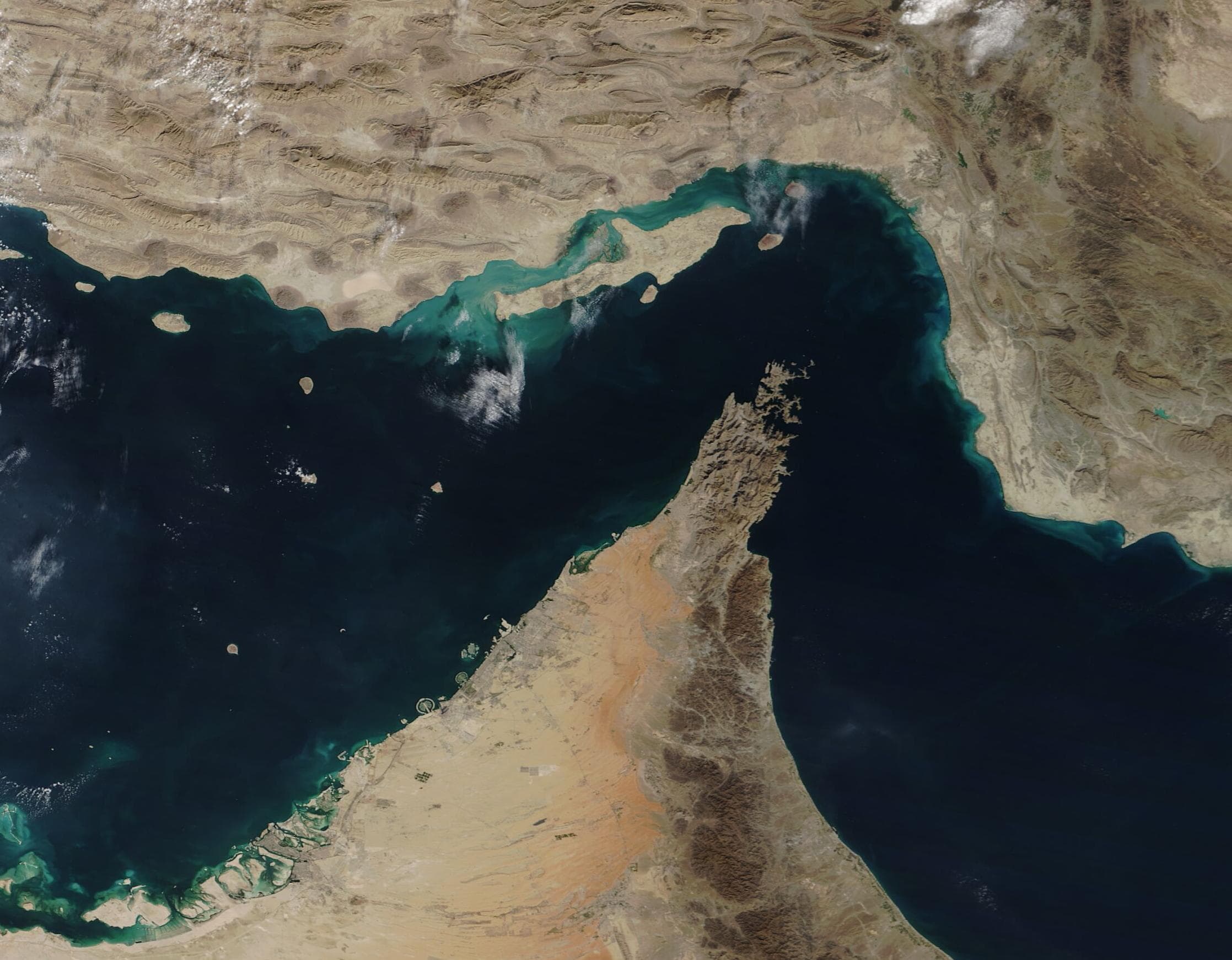
Those vessels were using the southern lane near the Omani coast, the route Washington has described as open. The war that began more than six months ago has already cut the share of world seaborne oil that moves through the strait. Before the fighting, about a fifth of global oil supply passed the 34-kilometre gap between Iran and the Musandam Peninsula.
From Larak to Qeshm
On Sunday, 30 August, U.S. forces hit two IRGC launchers on Larak Island. Capt. Tim Hawkins of CENTCOM said the crews were preparing rockets loaded with sea mines. That was the first acknowledged American strike on Iran since late July. Iran answered on Monday by firing at U.S. bases in Jordan. Tehran also claimed a strike on Al Minhad air base in the United Arab Emirates. Abu Dhabi dismissed that claim.
President Donald Trump told Fox News on Monday that the United States would hit Iran hard. In the Oval Office he also called Iran a failed nation, citing inflation he put at 300 percent and saying its leaders should face war-crimes trials. Vice President JD Vance said the president would not announce military actions on social media. Reuters later reported that Trump and senior aides had discussed limited further strikes in the strait to stop Iran rebuilding radar and missile sites.
What the oil market did
Brent crude, already up about 2 percent on Tuesday, jumped almost another 2 percent on the strike reports, Reuters said. The six-month fight has kept liquefied natural gas tight in Asia and Europe. European gas stores were reported near 63 percent in late August. Indian city-gas companies have already passed higher imported-LNG costs into retail CNG prices in Delhi.
Neither side has said it wants a return to the large salvoes of June and July. Both have also refused to concede control of the waterway. Trump has repeated that the United States controls the strait. Iran has insisted it retains the right to police shipping. The result is a pattern of tanker hits, limited U.S. raids, Iranian fire at regional bases, and another oil spike.
Qeshm is Iran's largest Persian Gulf island. Larak sits closer to the traffic lanes. Bandar Abbas is the main southern naval and commercial port. Chabahar, farther east on the Gulf of Oman, is the Indian-backed port that New Delhi has used as an alternative to Pakistani routes. Any widening of the target list toward Chabahar would touch a separate Indian commercial interest that has so far stayed outside the shooting.
What is still unknown
CENTCOM did not name the specific units, radars or boats it hit on Tuesday. Iran did not publish casualty figures that independent outlets could check. The owners of the two Monday tankers had not, by Tuesday night, released names, flags beyond the initial reports, or cargo details. The UN secretary-general's office called for maximum restraint after the weekend exchange. That appeal has not changed the targeting.
The next test is whether the southern lane stays usable. If more outbound tankers take hits, insurers will raise war-risk premia again and more owners will wait outside the Gulf. If the Tuesday raid destroyed the mine-laying gear CENTCOM says it was after, the pause may last weeks, as it did after late July. The record of the past six months is that the pause does not last.
Continue reading
 News
NewsMeerKAT records radio bursts that track Beta Pictoris b, not the star
Almanaque Digital DeskCambridge, Massachusetts
- Finance
RBI clears Anup Bagchi as HDFC Bank chief from 27 October
Almanaque Digital DeskMumbai
- Finance
Nifty's eight-week slide leaves Monday's open under a 5.3 percent US yield
Almanaque Digital Desk