Hague tribunal says the Indus treaty still binds India. New Delhi says the court does not exist
The Permanent Court of Arbitration ruled unanimously on 31 August that the 1960 pact remains in force and limited work at Ratle. The MEA called the bench illegally constituted and left the abeyance order in place.

The Hague2 min read
Last updated
The Permanent Court of Arbitration in The Hague ruled on 31 August that the 1960 Indus Waters Treaty “remains fully in force” and that India “must observe its obligations” under it. India rejected the award the same evening. The Ministry of External Affairs called the tribunal “illegally constituted” and said New Delhi has never recognised it in law.
The five-member court, chaired by Professor Sean D. Murphy, sat without India in the room. Hearings ran from 26 to 28 April at the Peace Palace. Pakistan alone presented argument. The court said it examined every public ground India has used since 23 April 2025, when New Delhi placed the treaty “in abeyance”: sovereignty, alleged Pakistani support for cross-border attacks, refusal to renegotiate, population growth, climate change and India’s own energy needs. In a unanimous decision it found that none of those grounds, under the treaty or under general international law, justified suspension or termination.
A second order concerns the Ratle hydroelectric plant on the Chenab in Jammu and Kashmir. The court barred specified concreting on the dam wall and the power intake until 90 days after a World Bank-appointed neutral expert issues a final determination, expected around July 2027.
India’s reply was institutional rather than technical. The MEA said the World Bank constituted the court in October 2022 “in patent breach” of the treaty’s dispute clauses. New Delhi has declined to file pleadings, nominate an arbitrator or attend any sitting. “This so-called Court of Arbitration has no jurisdiction whatsoever to pronounce on India’s sovereign decisions,” the ministry said. It added that the abeyance decision “remains in force” until Pakistan “credibly and irrevocably” ends support for cross-border terrorism, a charge Islamabad denies.
Pakistan treated the award as confirmation. Prime Minister Shehbaz Sharif told the SCO summit in Bishkek that water cannot be weaponised and that treaties on shared rivers are “solemn.” Foreign Minister Ishaq Dar sketched a three-step path: observe the treaty, use its own mechanisms for disputes, and restore technical talks and data-sharing.
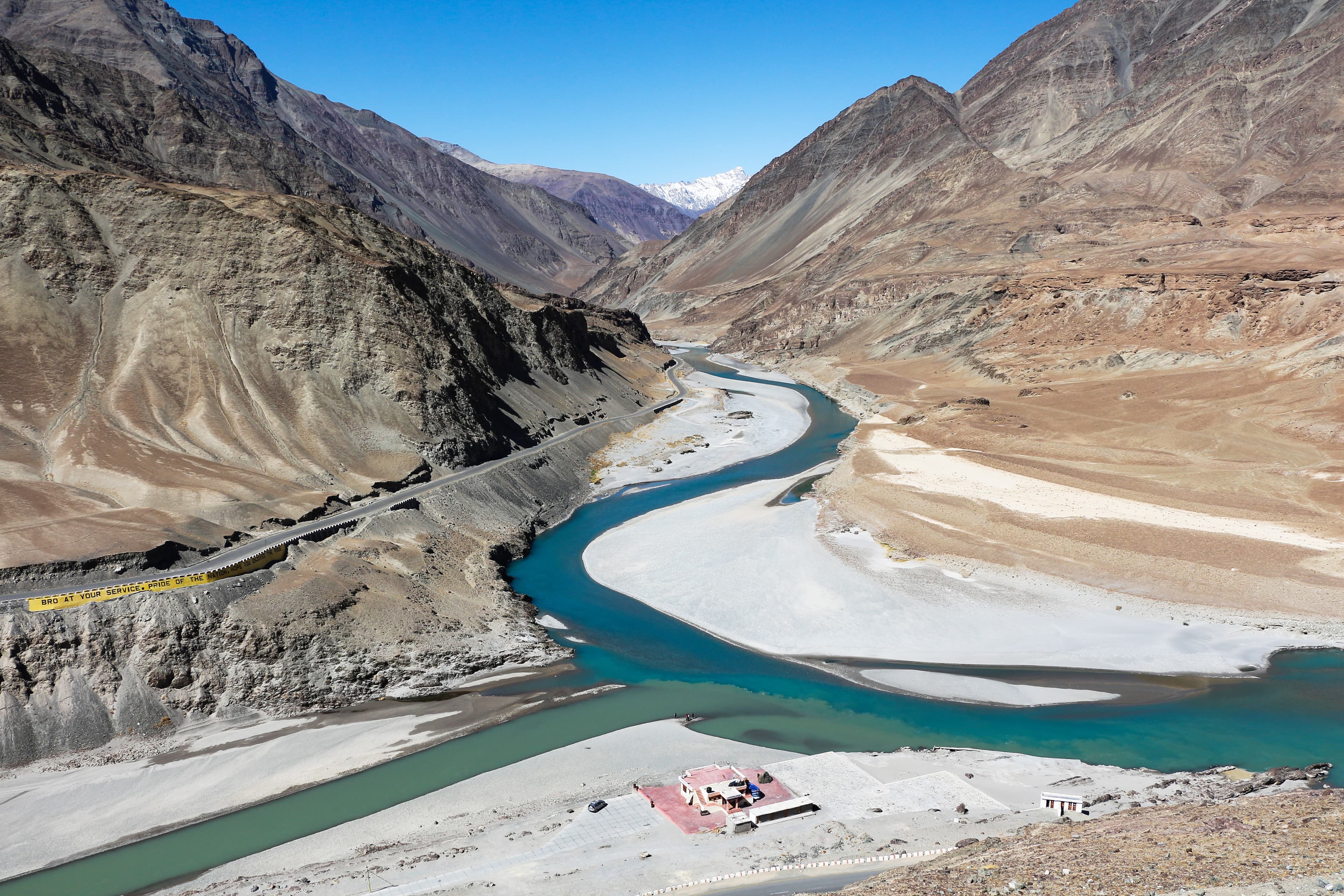
The 1960 pact, brokered by the World Bank, assigned the three eastern rivers (Ravi, Beas, Sutlej) to India and the three western rivers (Indus, Jhelum, Chenab) to Pakistan, with limited Indian use for run-of-river hydropower. Those western rivers feed a large share of Pakistani irrigation. That is why an “abeyance” declared in New Delhi is read in Lahore and Multan as a threat to the next wheat crop, even when no dam gate has yet been closed.
Enforcement is the open question. The PCA has no police. India is a member of the court as an institution and still refuses this particular bench. Work at Ratle can continue if New Delhi ignores the interim order. Data-sharing, which India has already throttled, will not resume because a paragraph in The Hague says it should.
Two facts sit under most of the coverage. India never appeared. The record was written by the only party in the room. That does not make the legal reasoning vanish, and it does not make the rivers move. The practical test is on the Chenab and in the daily hydrological cables. The award is now part of the legal record. The rivers will show whether that record moves any concrete.
