Xi tells Cairo the region should write its own security order
On his first Middle East trip in four years, Xi Jinping proposed a four-point security architecture, signed more than 20 documents with Egypt, and walked the Grand Egyptian Museum with Abdel Fattah el-Sisi.

Cairo3 min read
Last updated
Chinese President Xi Jinping used a state visit to Egypt on 2 September to call for a new Middle East security architecture written by the states of the region, not by outside powers, and to lock in a stack of commercial papers with Cairo while U.S. and Iranian forces traded strikes across the Gulf.
Talks with President Abdel Fattah el-Sisi at Al-Ittihadiya Palace produced a joint statement on deepening the comprehensive strategic partnership and more than 20 cooperation documents. The list, according to China's foreign ministry and Xinhua, covers Belt and Road projects, artificial intelligence, trade, industrial supply chains, the digital economy, science, education and transport. The visit marks 70 years of diplomatic ties and Xi's first trip to Egypt in a decade. It is also his first appearance in the Middle East since he went to Saudi Arabia in 2022.
The security language
Xi said regional countries should be masters of their own destiny and explore a new security architecture. Xinhua summarised a four-point proposal: good-neighbourly relations, a vision of common and sustainable security, opposition to what Beijing calls unilateralism and bullying, and readiness to work with regional states to protect shipping lanes.
The shipping line is not ceremonial. Traffic through the Strait of Hormuz and the Bab al-Mandeb has been disrupted by the U.S.-Iran war that began in late February. China is a large buyer of Gulf crude. Egypt sits on the Suez Canal. A Chinese offer to help guard routes is a bid for a role that the United States has treated as its own for decades.
Egypt remains a major U.S. defence partner. Washington still sends about $1.3 billion a year in military aid. Sisi, in an article published before the visit, described Egypt's posture as strategic balance. That phrase is the practical frame for the week. Cairo is not leaving the American security relationship. It is adding a Chinese commercial and political track while the American war with Iran raises the cost of relying on a single external patron.
The museum as the second stage
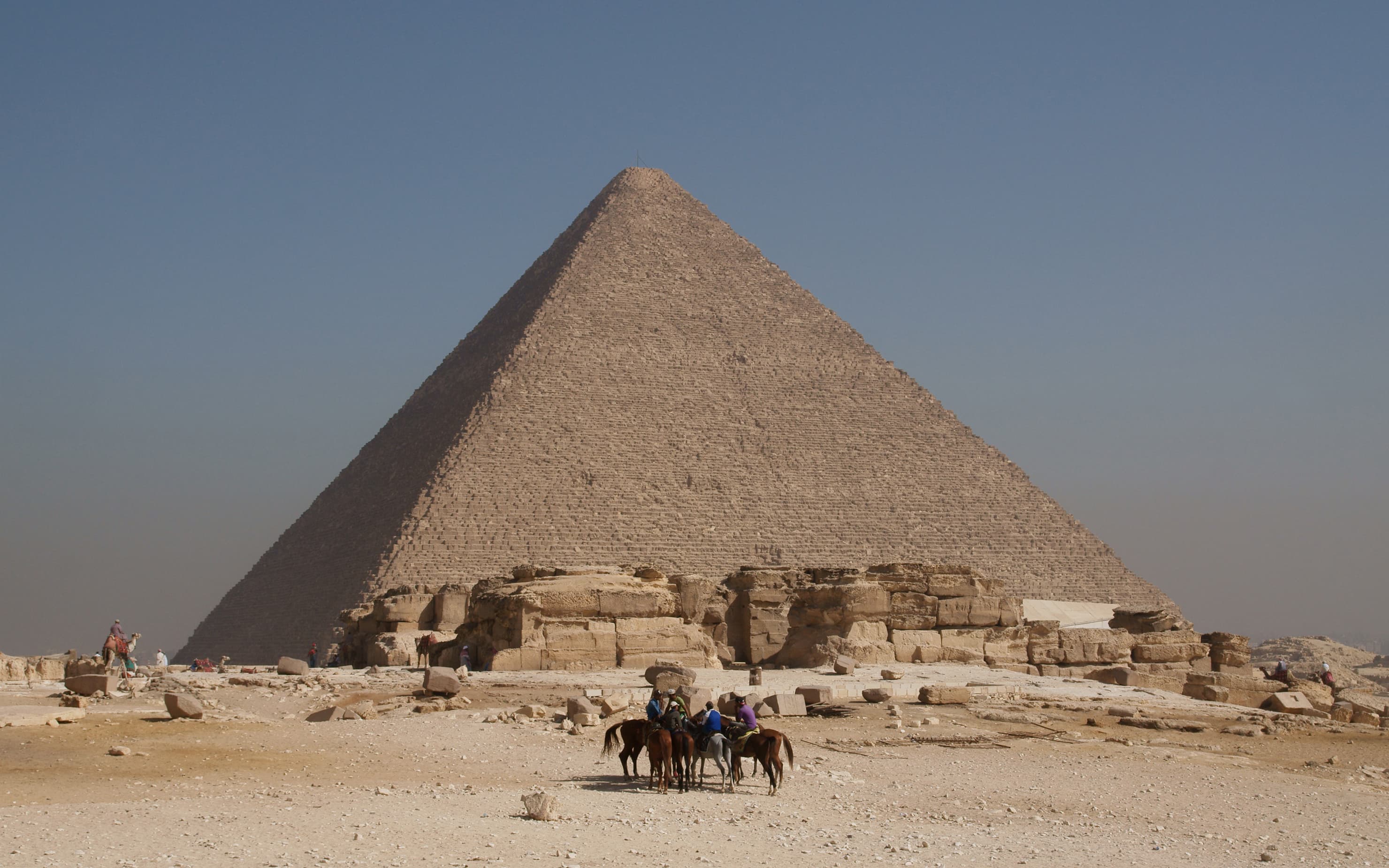
After the palace talks, Xi and Peng Liyuan visited the Grand Egyptian Museum with Sisi and Entissar el-Sisi. They stood on the observation deck that looks toward the Giza pyramids and walked the Tutankhamun galleries, including the throne, the gold mask and the royal chariots. Xi said the two civilisations had been reaching toward each other across time. Sisi thanked him for congratulations on the museum's opening last year and linked the site to Beijing's Global Civilization Initiative.
The museum visit is the soft half of the same message. China wants to be present in the region's memory industry as well as its ports and data centres. Reuters reported that the two sides discussed expanding work on data centres and semiconductors. Those sectors matter to Egypt's attempt to host regional computing load and to China's search for partners outside the U.S. export-control net.
What the papers actually change
A joint statement and a pile of memoranda do not by themselves reroute oil, chips or missiles. They do change the calendar. Egyptian ministries now have signed tracks with Chinese counterparts in AI, logistics and industry at the moment when U.S. missions in Jordan, Israel, Qatar, the UAE, Saudi Arabia, Kuwait and Bahrain are warning citizens of unforeseen escalation.
Xi arrived on the evening of 1 September to a red-carpet reception at Cairo International Airport. The talks ran on the morning of 2 September. The museum visit filled the same day. The speed is the point. Beijing wanted a visible Middle East stop while the Iran war was back on the front page, and it wanted that stop in a capital that still takes American military money.
The test is whether any of the 20-plus documents produce a plant, a cable, a berth or a data hall that would not have been built anyway. Until those projects break ground, the durable fact is the sentence Xi put on the record in Cairo: the region, he said, should write its own security order. Washington will read that as a challenge. Cairo will read it as another option.
Continue reading
 News
NewsJapan's permanent-residence fee is now 200,000 yen, twenty times the old charge
Almanaque Digital DeskTokyo
- News
Delhi extends ECGC cover under RELIEF as Gulf shipping risk stays high
Almanaque Digital DeskNew Delhi
- News
Ibaraki's governor blocks the second stage of a nuclear waste survey
Almanaque Digital Desk