UN General Assembly backs Equal Earth map 164-1, United States alone against
Togo's resolution for the African Union urges schools, governments and technology firms to drop Mercator's size distortion. The text is not binding and leaves Mercator in place for navigation. France said it will stop using Mercator.

New York3 min read
Last updated
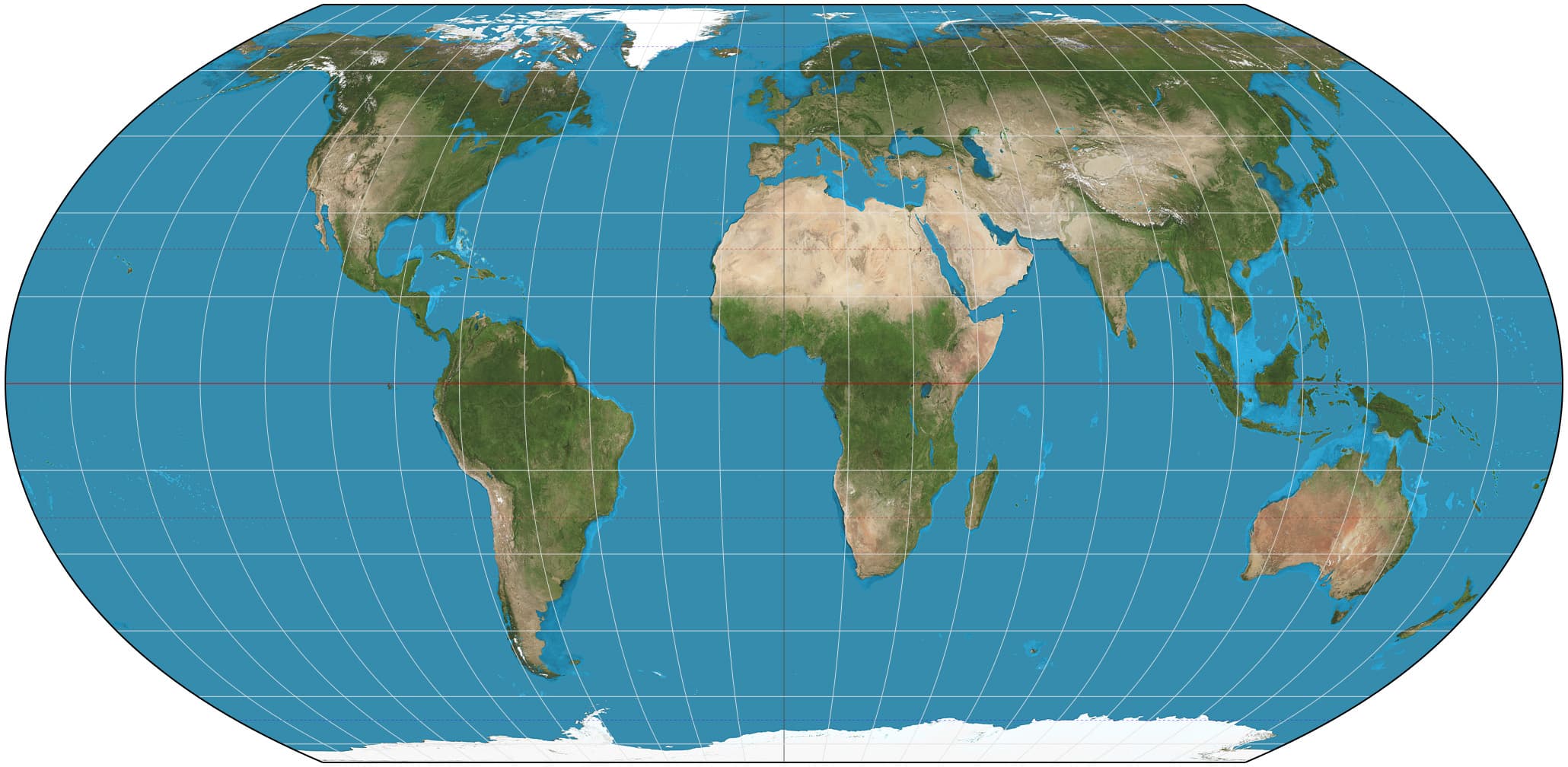
The United Nations General Assembly voted 164 to 1 on 4 September to encourage governments, schools and institutions to use the Equal Earth projection instead of the 1569 Mercator map when the point is to show the true relative size of countries. The United States cast the only no vote. Serbia, Estonia, Georgia, Lithuania, Moldova and Ukraine abstained.
Togo sponsored the text on behalf of the African Union. The Bahamas co-sponsored. France, which joined the campaign, said the same day that it will stop using Mercator in official representations that are meant to show land area.
What the two maps actually do
Gerardus Mercator's 1569 chart was built for sailors. It keeps compass bearings as straight lines. To do that on a flat rectangle it stretches land as you move away from the equator. Greenland and Africa look similar in size on a classroom Mercator. Africa is about 14 times larger than Greenland.
Equal Earth, published in 2018 by Bojan Šavrič, Bernhard Jenny and Tom Patterson, is an equal-area pseudocylindrical projection. Continents keep their relative surface area. Europe looks smaller. Brazil looks larger. Africa occupies the share of the page that matches its 30 million square kilometres.
The resolution does not ban Mercator. Togo's foreign ministry said the text "in no way challenges the use of the Mercator projection for maritime and aerial navigation, for which it remains fully suited." The vote is an instruction about classrooms, government websites, news graphics and software defaults, not about a ship's chart table.
The political argument
Togo's foreign minister, Robert Dussey, put the case in one sentence before the vote: "A fair world begins with a fair map." African Union members have argued for years that Mercator's compression of the tropics trained generations to treat Africa as peripheral. The AU adopted Equal Earth for its own use in March. Togo then asked UN members in April to do the same. Informal consultations ran in July.
The United States called the resolution an "ideological agenda" and a distraction from "genuine problems of international peace, prosperity or good relations." That is a diplomatic way of saying Washington does not want the General Assembly to spend political capital on cartography. The 164-1 split shows how isolated that position was on this particular file.
The six abstentions clustered among states that sit close to Russia or have their own fights at the UN over maps and status. None of them joined the US no vote.
What changes on Monday
Almost nothing, unless education ministries and map platforms act. Togo said it wants the Equal Earth map in its schools by the end of the year. France's foreign minister, Jean-Noël Barrot, announced that France will abandon Mercator where the purpose is to show surface area.
The harder target is software. Google Maps, classroom posters, news tickers and exam papers still default to Mercator or to Web Mercator, the variant that runs most online tiles. A General Assembly resolution cannot rewrite those codebases. It can give procurement officers and curriculum boards a citation when they ask a vendor to switch.
Equal Earth is not the only equal-area option. Gall-Peters, used by Boston public schools from 2017, also preserves area but distorts shape more severely. The UN text picks Equal Earth because its authors designed it to look closer to the familiar Robinson outline while keeping area honest.
The limit of the win
Maps are arguments. Mercator was an argument that navigation mattered more than area. Equal Earth is an argument that area should not be sacrificed to a 16th-century sailing requirement when the audience is a child or a diplomat. Friday's vote settles the UN's preference. It does not settle what appears on the wall behind a teacher next term, unless that teacher works in Togo, France or another ministry that follows through.
Continue reading
 News
NewsSettlers kill Mashour Yassin, 51, at his home on the edge of Yasuf
Almanaque Digital DeskYasuf
- News
Pakistan says 22 fighters died in Kunar and Helmand; the UN counts 10 civilians
Almanaque Digital DeskKabul
- News
Tennessee pauses executions after Christa Pike survives two doses of pentobarbital
Almanaque Digital Desk