Trump sends Saudi civil nuclear pact to Congress, keeps Israel condition
The classified 30-year agreement covering AP1000 reactors has started a 90-session-day review, but the White House says it will proceed only if Riyadh joins the Abraham Accords.

Washington4 min read
Last updated
President Donald Trump has sent a proposed civil nuclear cooperation agreement with Saudi Arabia to Congress while repeating that the pact will take effect only if Riyadh normalises relations with Israel. An administration official confirmed the submission to Reuters on Tuesday. The classified document reached Capitol Hill on Monday under the Atomic Energy Act. Congressional sources said committees were expected to receive it on Wednesday.
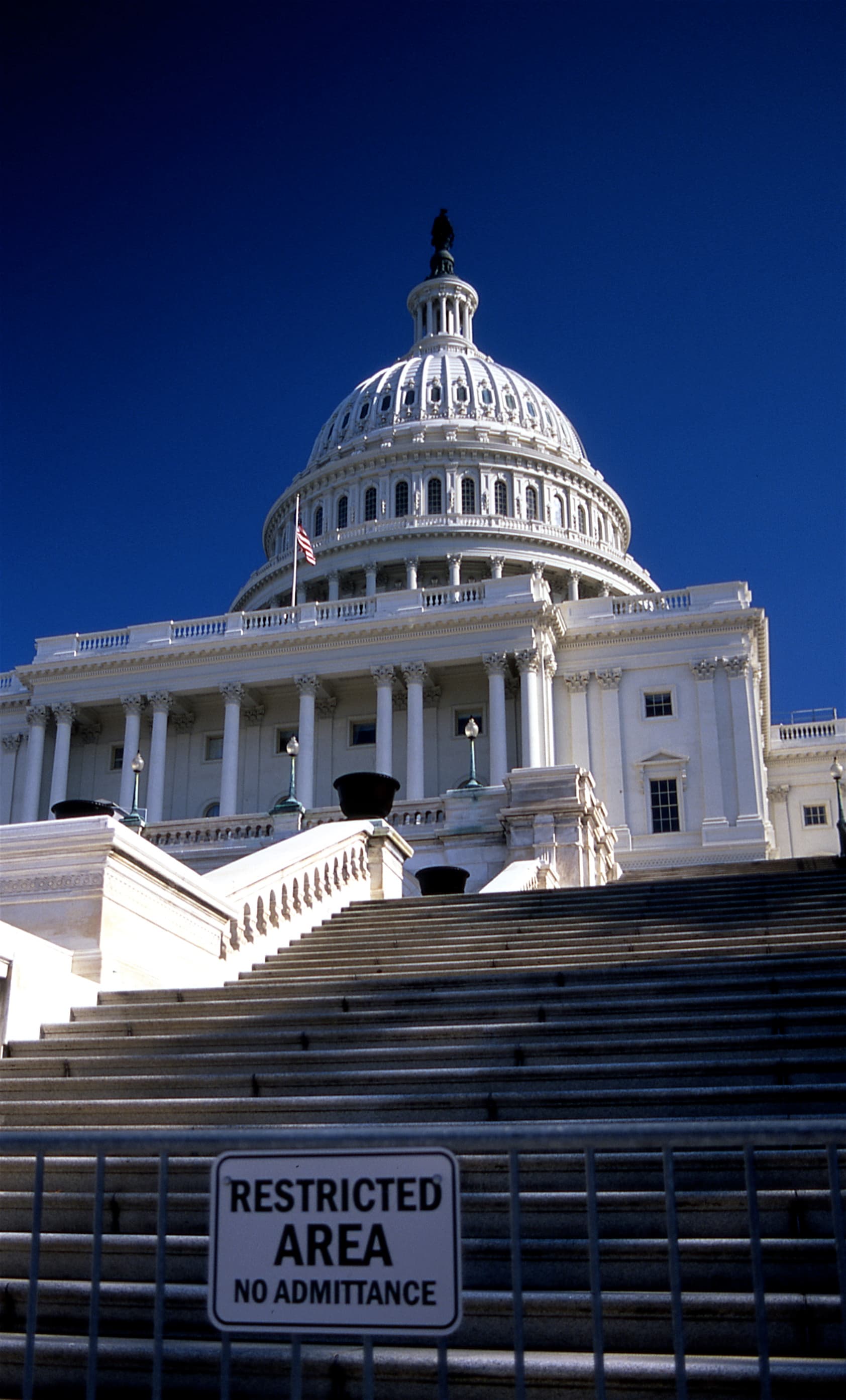
Congress now has 90 session days to review the text. Unless lawmakers pass a joint resolution of disapproval, the agreement enters into force without a floor vote in either chamber. If Congress does reject it, Trump can veto that resolution. Overriding the veto would require a two-thirds majority in both houses.
The 30-year accord, signed in Washington in July by Energy Secretary Chris Wright and Saudi Energy Minister Prince Abdulaziz bin Salman, would allow US firms to export civilian nuclear technology to the kingdom. It calls for construction of AP1000 reactors, a project worth tens of billions of dollars. Westinghouse, jointly owned by Canada-based Cameco and Brookfield Asset Management, stands to supply the design. Trump has said the deal bars uranium enrichment.
A condition added after the signing
The day after the July signing, Trump posted on Truth Social that approval was “totally subject to Saudi Arabia joining the very respected and successful Abraham Accords.” White House press secretary Karoline Leavitt told reporters the energy deal was contingent on that condition “as far as the president is concerned.” The official who spoke this week said the president’s position has not changed.
The sequence has left a gap between the paper sent to Congress and the political test Trump has attached to it. The classified 123 agreement, as these pacts are known, is unusual in that the entire text is secret. Typical 123 agreements are public enough for outside specialists to parse enrichment, reprocessing and inspection clauses. Lawmakers will review this one in classified settings.
Saudi Arabia has not accepted the Israel condition. Riyadh has tied recognition of Israel to an irreversible path toward a Palestinian state, a position Crown Prince Mohammed bin Salman has restated since the Gaza war began in 2023. The Saudi embassy in Washington did not immediately comment on the congressional filing.
Proliferation arguments on both sides
Supporters of the pact say a US-designed programme with no enrichment keeps Saudi nuclear work inside an American supply chain and under US export controls. They note that the United Arab Emirates already operates civilian reactors under a similar framework, and that Iran’s programme is the proliferation problem the region already faces. Trump has compared the Saudi deal to facilities “Iran and UAE (and others) already have.”
Critics say the timing is the problem. Washington is in an active conflict with Iran in which enrichment and the Strait of Hormuz are central issues. Saudi officials have said the kingdom would pursue a weapons capability if Iran obtains one. Sending reactor technology to Riyadh while a war over Iran’s programme continues, they argue, weakens the case that civilian nuclear trade can be fenced off from military ambition.
Israel and its supporters in Congress raised those objections after the July signing. Trump’s later condition on the Abraham Accords was, in part, a response to that alarm. Whether the condition can be written into the legal instrument, or remains a presidential political hold, is not clear from the public record. Leavitt suggested in July that the condition could still be added as talks continued.
What 90 session days actually means
Session days are not calendar days. Recesses and weekends do not count. A 90-session-day clock can run well into 2027 depending on the congressional calendar. That delay gives both governments room to bargain over Israel, Palestine and the fine print of fuel supply. It also leaves Westinghouse, Cameco and Brookfield waiting on a political outcome they cannot control.
A two-year feasibility study on the enrichment question was discussed around the July signing. Trump has publicly ruled enrichment out. Any study that reopened that door would face a harder path in Congress than a reactor-only deal.
The filing arrives while oil traffic through the Strait of Hormuz remains disrupted by the Iran war. Japan has talked of supporting alternative Middle East pipelines. Gulf states are looking for energy security that does not run through the strait. A nuclear build in Saudi Arabia would not replace oil exports, but it would change the kingdom’s domestic power mix and its long-term fuel options.
For now the document sits with congressional leaders. The legal clock has started. The political clock, which Trump tied to an Israeli-Saudi handshake that Riyadh still refuses, has not. Those two clocks will run on different schedules until one of them stops.
Continue reading
 News
NewsChrista Pike discharged from hospital and returned to Tennessee prison after surviving lethal injection
Almanaque Digital DeskNashville, Tennessee
- News
Hurricane Simon strengthens to Category 4 as it nears Mexico's Pacific coast
Almanaque Digital DeskManzanillo, Mexico
- News
Nine killed in Erie, Pennsylvania mass shooting including two children and a pregnant woman