The Bayeux Tapestry is back on English soil. Charles, Macron and Burnham walked it.
France loaned the 70-metre embroidery, insured for 960 million euros, for a 10-month show at the British Museum. It is the first time the cloth has left Normandy for Britain since the eleventh century.

London3 min read
Last updated
King Charles III, President Emmanuel Macron and Prime Minister Andy Burnham walked the length of the Bayeux Tapestry at the British Museum on 2 September, the day the 70-metre embroidery was shown to them before it opens to the public on 10 September. Queen Camilla, Brigitte Macron and Marie-France van Heel walked with them. Charles, speaking partly in French, called the loan “a precious symbol of trust at a time when trust seems sadly to be in short supply between nations.”
The cloth has not touched British soil since it was made, most likely in England, in the years after 1066. France agreed to send it while its home museum in Bayeux is refurbished. The insurance figure published with the loan is 960 million euros, about $1.1 billion. The move itself was a closed road-and-rail operation in July. Curators will now keep the linen at controlled light and humidity until the show ends in July 2027, or September 2027 in some museum notes. Either way, the visit is measured in months, not in a weekend.
Burnham used the walk for a joke Macron could answer. Standing by a passage that stops short of the final scenes, the prime minister said the work was “Made in England, they couldn’t bear to show the end… too difficult.” Macron said, “Happy end, we’re here.” Charles laughed. He later pointed out a group of Normans pulling a cart and told Macron it was his favourite passage. The public will not get that tour. They will get timed tickets. Reuters reported that demand has already made the show the museum’s best seller, with about £2.5 million raised before opening day.
The politics sit one layer out. Macron is the first European leader to visit Britain since Burnham took office, after Keir Starmer left No 10 and then his Holborn and St Pancras seat. The two men were due to hold their first proper talks on 3 September. The tapestry walk was the photograph that precedes the working session. Charles gave them a line they can both use: the loan is a symbol of a shared future “woven as it should be by Britain and France together.” Burnham needs that sentence. Brexit still sits in every Channel file he opens, from small-boat crossings to defence industrial work.
The museum is spreading the story beyond Bloomsbury. A programme called Bayeux Around Britain will put a digital version in more than 70 partner sites across the four nations: museums, galleries, castles, cathedrals and heritage buildings. Burnham said he wanted people “everywhere in the country” to have the history, not only those who can book a London slot. That is a sound educational aim. It is also a way to make a French loan feel like a British public good in towns that will never see the linen.
Igor Tulchinsky, founder of the investment firm WorldQuant, is listed as a sponsor of the London exhibition. The museum has not put a public figure on his share of the cost. The French state and the City of Bayeux remain the owners. The British Museum is the borrower. UNESCO already lists the tapestry on its Memory of the World register. None of that changes the physical risk. A 950-year-old woollen embroidery does not travel twice in a decade. This trip is the exception that the loan agreement was written to justify.
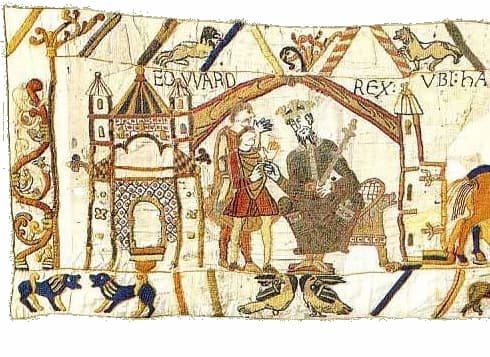
The scenes the party stopped at were the ones every schoolbook knows: Edward the Confessor, Harold’s oath, Harold’s death at Hastings with the disputed arrow. Those scenes are why the cloth is a diplomatic object as well as a textile. It is a Norman victory story stitched, many scholars still argue, by English hands. Lending it to London lets both capitals claim the same object. Macron can say France trusted Britain with the original. Burnham can say England has the story home for a year. Charles can say the two countries still know how to keep a promise about a piece of cloth.
The public opening on 10 September will test the conservation plan and the ticket system. The talks on 3 September will test whether Burnham and Macron can move from embroidery to Channel policy. The tapestry will be indifferent to both tests. It has survived nine and a half centuries. It will survive ten months in Great Russell Street.
Continue reading
 News
NewsSettlers kill Mashour Yassin, 51, at his home on the edge of Yasuf
Almanaque Digital DeskYasuf
- News
Pakistan says 22 fighters died in Kunar and Helmand; the UN counts 10 civilians
Almanaque Digital DeskKabul
- News
Tennessee pauses executions after Christa Pike survives two doses of pentobarbital
Almanaque Digital Desk