Syria’s Kurdish-led SDF dissolves after merger into the national army
Commander Mazloum Abdi announced the end of the force at the presidential palace in Damascus, completing a deal struck after government troops overran most SDF ground in January.
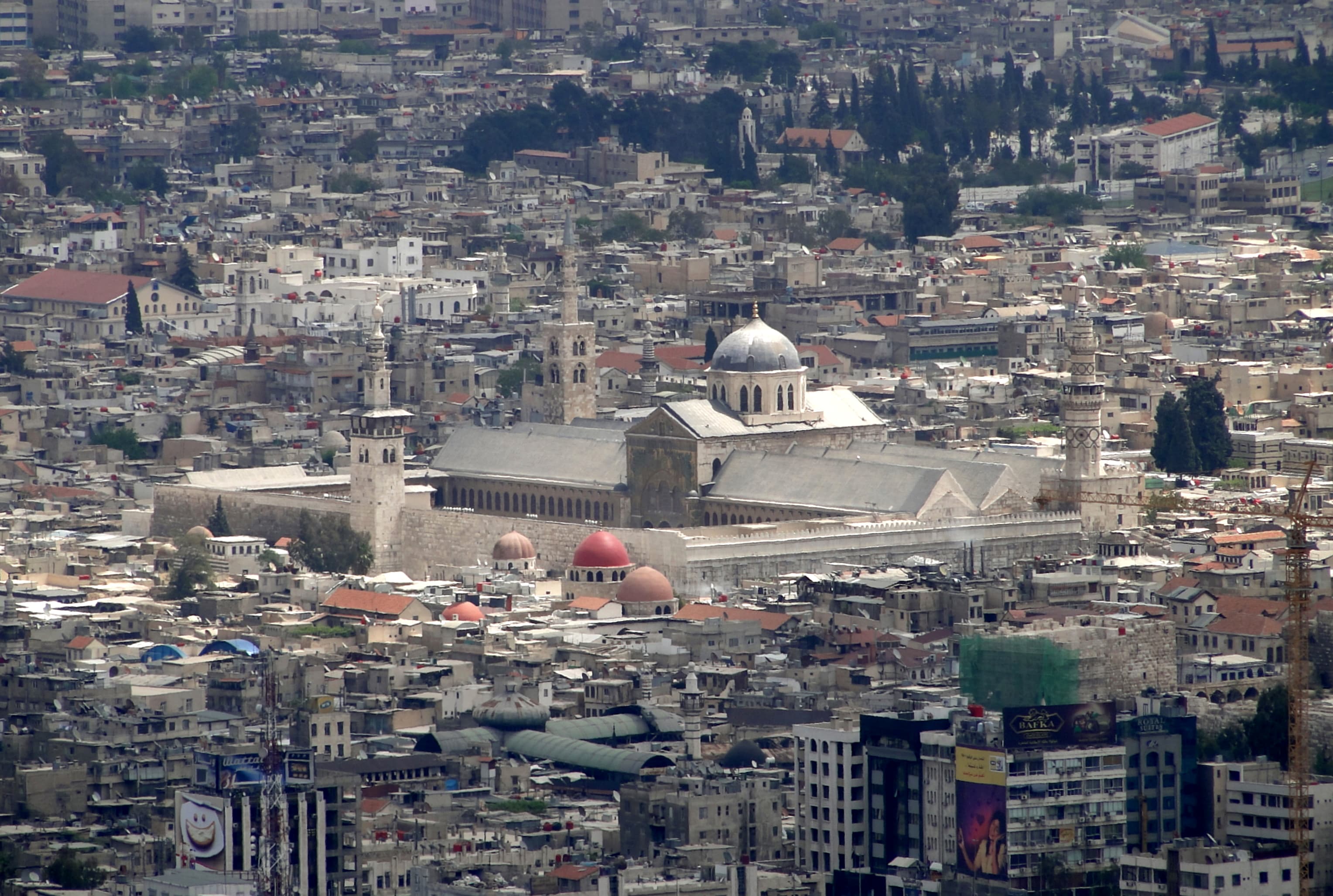

Damascus3 min read
Last updated
Mazloum Abdi stood in the presidential palace in Damascus on Tuesday and ended the Syrian Democratic Forces as an independent army. “We announce today the end of the mission of the Syrian Democratic Forces and announce with full responsibility its dissolution as an independent military force,” he said. The announcement followed what he described as the completed integration of SDF units into the Syrian army under an agreement with President Ahmed al-Sharaa.
The SDF, built around the Kurdish People’s Protection Units, had been the main US-backed ground force against Islamic State in northern and eastern Syria. It ran a de facto administration over a strip of territory that included oil fields, prisons holding IS suspects, and Kurdish-majority cities. That map collapsed in January when government forces under Sharaa mounted a rapid offensive and took most of the ground the SDF still held. Washington, which had called an earlier integration outline a “historic milestone,” had already pulled back its political cover.
Abdi framed the dissolution as a turn toward “peace, stability and reconstruction.” He said the force had carried “a heavy responsibility during one of the most difficult periods in Syria’s history” and that conditions had changed. He sought to reassure Kurds that education in the Kurdish language would be protected. Syrian state media showed him meeting Sharaa and Foreign Minister Asaad al-Shaibani to discuss “integration into Syrian state institutions” and “the next phase.”
What integration has already looked like
The January deal was meant to fold both fighters and civilian councils into the state. Sipan Hamo, the YPG commander, was appointed in March as deputy defence minister for the eastern territories. That posting was an early test of whether Kurdish officers would hold rank inside the new army or merely be listed on a chart. Abdi’s speech treats the military merger as finished. Civilian integration, including schools, local police and oil revenue, is less visible from Damascus television.
Sharaa’s government, which took power after the fall of Bashar al-Assad and the end of the civil war’s main phase in 2024, has made territorial monopoly its first task. The SDF was the largest organised force still outside the ministry of defence. Druze factions in the south, some of them backed by Israel, remain a separate problem. Israel still occupies a strip of southern Syria near the Golan. With the SDF dissolved, Damascus can claim that the northeast is no longer a second state.
Information Minister Khaled Zaarour called the decision a victory for the unity of land and people. Higher Education Minister Marwan al-Halabi said it would “consolidate the presence of the state and its institutions across Syria.” Those lines are the government’s message. They do not answer how many former SDF fighters will keep their weapons under new patches, how prisons holding IS members will be staffed, or who will collect the oil.
The American residual interest
The United States invested years and air power in the SDF campaign against IS. It also used the partnership to constrain both Damascus and Iranian-linked groups. That partnership is now a historical note. Any remaining US troops or advisers in the east will deal with a Syrian army chain of command rather than with Abdi as an allied commander. IS sleeper cells and prison breaks do not disappear because a flag changes. The question for Washington is whether the new army will hold those prisons and whether it will share intelligence.
For Kurdish civilians the risk is older. Self-rule in the northeast was a wartime product. Cultural and language rights were written into the January text. Abdi mentioned schools. Enforcement will depend on a government that fought the SDF in January and now needs Kurdish acquiescence to look unified. A right that exists only in a speech can be withdrawn in a circular from a ministry.
Abdi’s appearance in the palace was the ceremonial end of a force that once held a quarter of Syria. The practical end will be measured in payrolls, armouries and school timetables over the coming months. Tuesday was the day the independent command ceased to exist on paper. The ground it used to govern is already under someone else’s flag.
Continue reading
 News
NewsChrista Pike discharged from hospital and returned to Tennessee prison after surviving lethal injection
Almanaque Digital DeskNashville, Tennessee
- News
Hurricane Simon strengthens to Category 4 as it nears Mexico's Pacific coast
Almanaque Digital DeskManzanillo, Mexico
- News
Nine killed in Erie, Pennsylvania mass shooting including two children and a pregnant woman