Ratko Mladić dies in UN custody at 84 while serving a life term for genocide
The Bosnian Serb commander died on 27 August in the detention hospital in The Hague. He was convicted in 2017 for Srebrenica and the siege of Sarajevo. Judge Graciela Gatti Santana ordered an inquiry into the circumstances of the death.

The Hague2 min read
Last updated
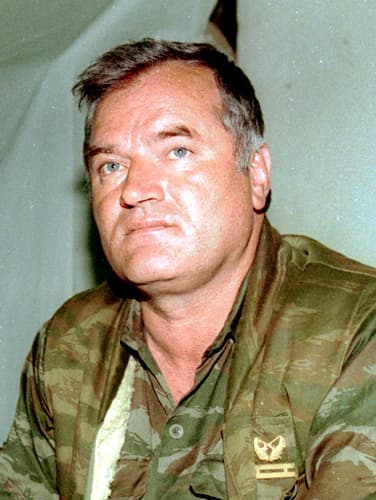
Ratko Mladić, the Bosnian Serb army commander convicted of genocide for the 1995 massacre at Srebrenica, died on Thursday, 27 August, in the hospital ward of the United Nations detention unit in The Hague. He was 84. The International Residual Mechanism for Criminal Tribunals confirmed the death and said Judge Graciela Gatti Santana had ordered a full inquiry into the circumstances.
His lawyer, Dragan Ivetic, said Mladić had spent his last months in that ward. Lawyers had filed another request for early release on medical grounds only last week, quoting detention doctors who wrote that his overall condition had declined rapidly and that death might occur at any time. The court had rejected earlier bids. He had suffered several strokes. He spent a little more than 15 years in custody after his arrest in Serbia in 2011.
The International Criminal Tribunal for the former Yugoslavia sentenced him to life in November 2017. Judges found him guilty of genocide, crimes against humanity, persecution, extermination, murder, terror, unlawful attacks on civilians and hostage-taking. The genocide count attached to Srebrenica, where Bosnian Serb forces killed at least 8,000 Bosniak men and boys in a United Nations-declared safe area in July 1995. He was acquitted of a separate genocide charge covering crimes in several municipalities in 1992. The appeals chamber of the residual mechanism upheld the conviction and the life term in 2021.
Mladić also commanded the siege of Sarajevo, a 1,425-day bombardment and sniping campaign against a capital that the tribunal treated as a crime of terror against civilians. On the day he took command of the Bosnian Serb army, according to contemporaneous reporting from the war, he warned the political leadership that the project they were starting was a vast criminal enterprise. He then carried it out. At sentencing he shouted that the court was lying.
His age was itself a small dispute. Documents used 12 March 1942. His son Darko has said he was born on 8 March 1943. Darko was travelling to The Hague on Thursday. Family members and Serbian officials had asked for release on health grounds. Those requests never met the tribunal's test that continued detention no longer served justice.
Emir Suljagić, who directs the Srebrenica Memorial Center, wrote that the death changes little. It does not return the dead, erase the graves or alter the verdicts. That is the legal fact. The political fact in parts of Serbia and Republika Srpska is different. Murals of Mladić still stand. Denial of the genocide remains a current argument, not an archived one.
He hid for 16 years after the Dayton Accords, most of that time inside Serbia, before specialist police arrested him in the village of Lazarevo in May 2011. Radovan Karadžić, the wartime political leader, had already been taken and was himself convicted of genocide in 2016. Slobodan Milošević died in the same detention system in 2006 before judgment. Mladić is the last of that command trio to die after a completed trial.
The inquiry ordered on Thursday is routine when a prisoner dies in UN custody. It will record the medical sequence. It will not reopen the judgement. The remains of more than 8,000 people killed at Srebrenica are still being identified, year after year, from secondary graves. That work continues without him.
Continue reading
 News
NewsFlores quake toll reaches 111, the deadliest in Indonesia since 2022
Almanaque Digital DeskRuteng
- News
Hyundai and its union reach a wage deal after the first full-day strike in a decade
Almanaque Digital DeskUlsan
- News
Penguin India drops Sonia Gandhi’s memoir after she refused cuts
Almanaque Digital Desk