Pashinyan says Armenia will file an EU membership bid before any referendum
The prime minister told parliament that a formal application must come first, after EAEU partners demanded a vote on Europe versus the Russia-led economic bloc.

Yerevan3 min read
Last updated
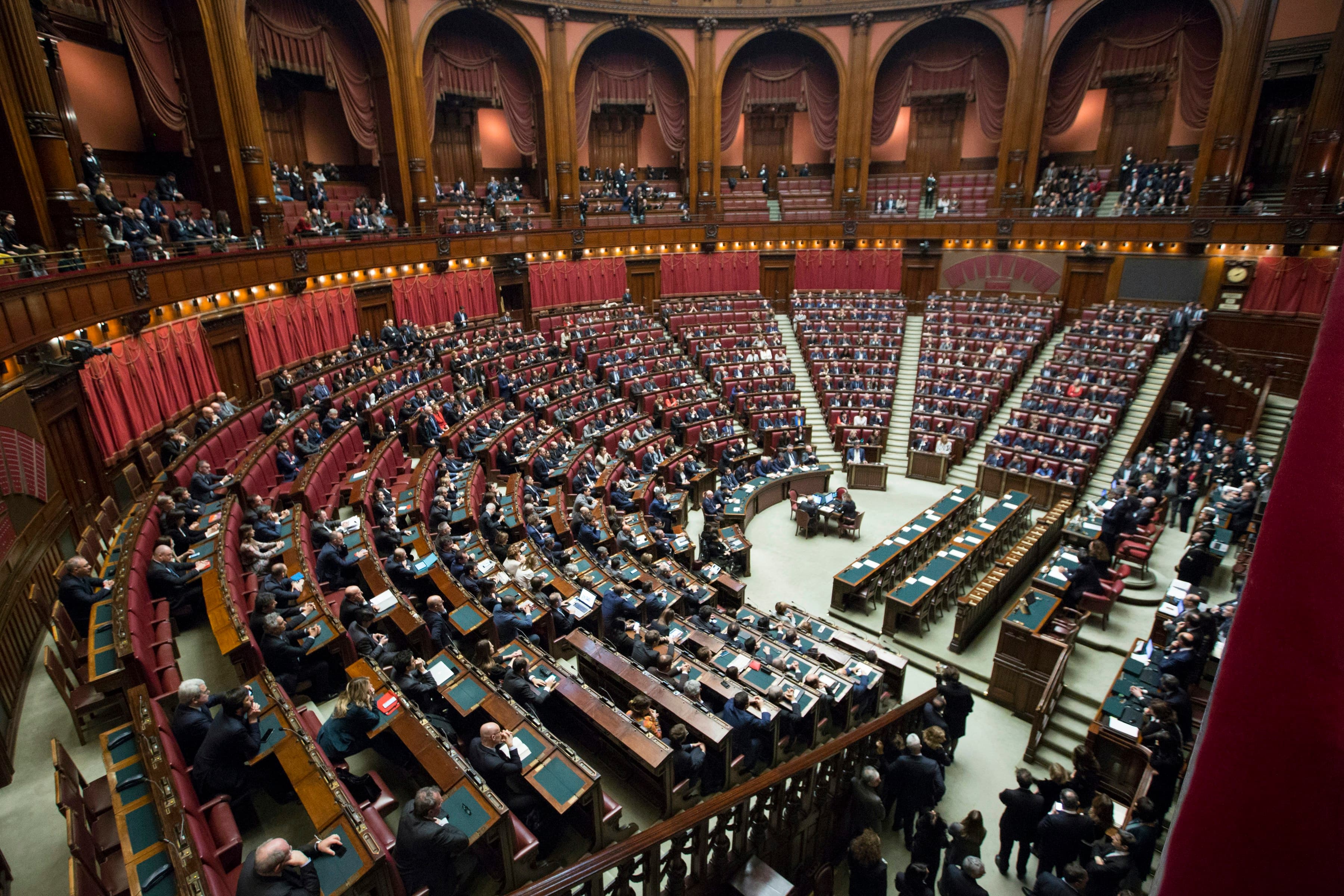
Armenian Prime Minister Nikol Pashinyan told the National Assembly on 24 August that Yerevan will start work on a formal application for European Union membership in the near future. He said a nationwide referendum on accession would come only after Brussels replies and a negotiation roadmap exists.
The sequence is the point of the speech. Other members of the Russia-led Eurasian Economic Union have pressed Armenia to choose, in a single vote, between the EU and the EAEU. Pashinyan rejected that framing. He argued that asking citizens to pick between two options when one of them has not even been requested would be empty. First file the papers, he said. Then measure what Brussels actually offers.
What parliament already did
Armenia does not hold candidate status. It has not lodged an application. What it does have is a law, adopted by parliament on 26 March 2025 and later signed by President Vahagn Khachaturyan, that launched an accession process without a date. The text recorded an aspiration. It did not send a dossier to the European Commission.
Pashinyan was presenting the government's programme for 2026 to 2031 when he made the new commitment. He tied it to two other tracks already in motion: visa-liberalisation talks with the EU that officials have discussed against a 2029 horizon, and the first EU-Armenia summit, held in Yerevan on 5 May. On 2 July, Commission President Ursula von der Leyen opened the EU market to most Armenian exports. Commission spokesman Markus Lammert later said Armenia is closer to the EU than it has ever been, while repeating that accession remains a merit-based process.
The CSTO freeze and the EAEU ultimatum
Armenia froze participation in the Collective Security Treaty Organisation in early 2024 after Russian forces failed, in Yerevan's view, to protect Armenian positions during the wars with Azerbaijan. The country remains a formal CSTO member. Pashinyan told deputies he would be glad if the organisation simply removed Armenia, because that would end the dilemma of whether to leave. He also said the government would not resume active CSTO participation over the next five years.
Kremlin spokesman Dmitry Peskov replied that Armenia is free to leave the CSTO if it no longer considers membership necessary. Moscow has separately warned that EU membership and EAEU membership are incompatible and that an EU course could mean suspension from the economic bloc, including the loss of discounted oil and gas. In May, President Vladimir Putin drew a parallel with Ukraine.
On 29 May the other four EAEU leaders, from Russia, Belarus, Kazakhstan and Kyrgyzstan, issued a joint statement calling for an Armenian referendum, as soon as possible, on EU accession or remaining in the Eurasian union. Pashinyan treated that statement as a reason to apply, not as a reason to vote first. He also described Russian restrictions on Armenian agro-food exports as a crisis inside the EAEU itself, because those goods had long gone almost only to Russia.
What an application would and would not decide
Filing a bid does not put Armenia in the Union. It starts a Commission opinion, then a political decision by member states on candidate status, then chapters of law that can take a decade or more. Georgia, Moldova and Ukraine already sit in that queue under very different security conditions. For Armenia the practical tests will be judicial independence, media rules, procurement, and the customs and energy arrangements that now run through the EAEU.
None of the steps Pashinyan listed has a date. No application has been sent. No referendum question has been drafted. The speech still changes the public record: the government now says the next move is a letter to Brussels, not a binary vote designed in Moscow. How Brussels answers, and what price Russia attaches to that letter, will set the next phase of the South Caucasus alignment fight.
Continue reading
 News
NewsChrista Pike discharged from hospital and returned to Tennessee prison after surviving lethal injection
Almanaque Digital DeskNashville, Tennessee
- News
Hurricane Simon strengthens to Category 4 as it nears Mexico's Pacific coast
Almanaque Digital DeskManzanillo, Mexico
- News
Nine killed in Erie, Pennsylvania mass shooting including two children and a pregnant woman