Norway seizes the Professor Molchanov in Svalbard over Naftogaz’s $4.22 billion award
A Nord-Troms court order, enforced by the Svalbard governor after a 24-hour stand-off, holds the Russian state expedition ship at Barentsburg. Moscow called the arrest piracy. The Hague award dates to April 2023.

Barentsburg3 min read
Last updated
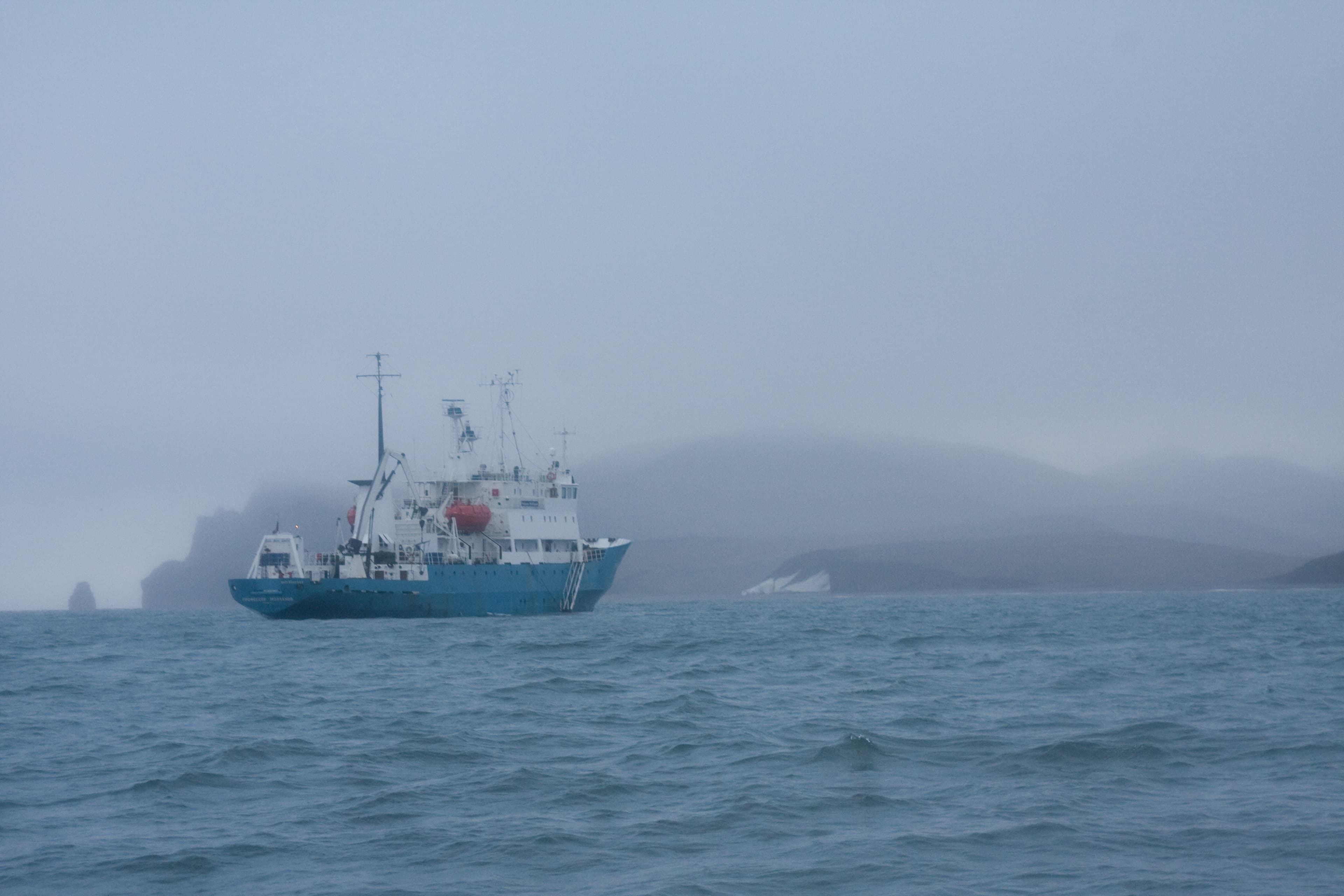
Norwegian authorities have arrested the Russian state expedition ship Professor Molchanov at Barentsburg, the Russian mining settlement on Svalbard, to enforce a $4.22 billion arbitration award won by Ukraine's Naftogaz over assets seized after the 2014 annexation of Crimea.
The Nord-Troms and Senja District Court issued the arrest order on 31 August. The Governor of Svalbard, who also acts as the local enforcement officer, carried it out on 2 September after a 24-hour stand-off with the Norwegian Coast Guard, according to Covington, the U.S. law firm acting for Naftogaz. The ship may not leave the berth chosen by the governor until the court or the governor says otherwise.
Naftogaz and six group companies began arbitration in 2016 under the 1998 Ukraine-Russia bilateral investment treaty. A tribunal sitting in The Hague ordered Russia in April 2023 to pay $4.22 billion plus interest and legal costs for the expropriation of gas fields, pipelines and related property in Crimea. The award has already been recognised as enforceable in Norway. Russia has not paid.
Acting chief executive Sergii Fedorenko called the arrest another step toward collecting that sum. He said Naftogaz will keep chasing Russian assets in other jurisdictions until the award is paid in full. The company has been hunting ships, bank accounts and commercial holdings across several countries for the same purpose.
The Professor Molchanov is a 1982-built ice-class vessel owned by the Russian Federation and used for commercial expedition cruises, including to Svalbard. Naftogaz's lawyers applied for the arrest in anticipation of its arrival at Barentsburg. The application was granted on Monday. The governor confirmed the ship would be held on Svalbard and said his office would look after crew and passengers together with Trust Arktikugol, the Russian state mining company that runs the settlement.
Russia's response was immediate and sharp. TASS quoted a Foreign Ministry spokesperson describing the Norwegian action as piracy. Ambassador Nikolai Korchunov demanded the ship's immediate release and said Moscow would pursue that demand through legal channels. He also asked Norway to guarantee the safety of everyone on board. The passenger count has not been published.
The legal fight sits on top of a political one. Svalbard is Norwegian territory under the 1920 Svalbard Treaty, which gives signatories, including Russia, commercial rights on the archipelago. Barentsburg is the last substantial Russian civilian presence there. Arresting a Russian state ship in that harbour, on the order of a mainland Norwegian court, tests how far those commercial rights stretch when an arbitral award against the Russian Federation is being collected.
Naftogaz's theory is simple. The award is final. Norway has recognised it. A ship owned by the judgment debtor entered Norwegian jurisdiction. The court therefore had power to freeze it as security for a sale. Russia rejects every link in that chain. It does not accept the Hague tribunal's jurisdiction over Crimea assets, treats the award as political, and now treats the arrest as an unlawful taking of state property.
Even if the ship is later sold, the proceeds will cover only a sliver of $4.22 billion plus years of interest. The value of an ageing expedition vessel is measured in tens of millions of dollars at most. The point of the arrest is pressure and precedent. Each successful freeze in a third country makes the next one easier to argue. Each public clash with Moscow raises the cost of keeping the award unpaid.
The governor now has two jobs that pull in different directions. He must keep the ship where the court put it. He must also keep a Russian mining town supplied and a ship's company housed through an Arctic autumn. Trust Arktikugol is the obvious local partner for the second task and an awkward one for the first, because it is itself a Russian state entity.
For Kyiv the file is part of a wider campaign to convert wartime and occupation losses into attachable property. For Oslo the file is narrower and more awkward. Norway supplies large sums to Ukraine and sits inside NATO. It also administers an Arctic archipelago where Russian civilians still live under a century-old treaty. The court order treats those facts as legally separate. The politics of Barentsburg do not.
What happens next is a contest over release terms, possible security in place of the hull, and whether a forced sale can be carried through before winter closes the harbour calendar. Russia has said it will fight the order. Naftogaz has said it will not stop at one ship. The Professor Molchanov, for now, stays at the quay.
Continue reading
 Politics
India and Pakistan summon envoys after two deaths on the Tarn Taran fence
Almanaque Digital DeskTarn Taran
- News
Spanish police clear Ceuta's Trampolin beach camp before the king's visit
Almanaque Digital DeskCeuta
- News
A drone hits Kyiv's northern bridge again as Merz arrives by train
Almanaque Digital Desk