Nepal flood toll reaches 1,344 as two tunnel workers are pulled out after nine days
Sanjay Shah and Kabir Maharjan came out of the Trishuli 3A hydropower tunnel on 4 September. Nepal Police put the missing at 4,898. India says 275 of its nationals remain unaccounted for, 49 of them on the Tibet side.

Kathmandu3 min read
Last updated
Nine days after an ice-rock avalanche tore through the Bhote Koshi and Trishuli valleys, the Nepal Army pulled two hydropower workers out of a blocked tunnel at Upper Trishuli 3A in Rasuwa. Sanjay Shah, a foreman, and Kabir Maharjan, from the mechanical crew, were brought out on the morning of 4 September. They had been inside the works since the flood of 26 August.
The same day, Nepal Police raised the confirmed death toll in Nepal to 1,344. Another 31 deaths were recorded in Tibet's Gyirong County. Police said 4,898 people were still missing in Nepal and 8,631 had been rescued. Of the recovered bodies, 489 were men, 269 women, 52 boys and 33 girls. Partial remains of 501 more people have been collected and have not been identified. Authorities have already buried or otherwise disposed of 1,030 of the recovered dead after taking DNA samples so families can later claim the remains.
India's Ministry of External Affairs put the number of missing Indian nationals at 275, including 49 last known to be on the Chinese side of the border. Spokesperson Randhir Jaiswal said 166 Indians had been rescued in Nepal and 1,907 Indians who had been in Tibet had crossed into Nepal. Three more Indians, including a five-year-old boy, were taken out of Trishuli Bazaar in Nuwakot on Friday. New Delhi has sent about 95 tonnes of relief and deployed forensic and tunnel teams to help with identification and excavation.
What happened on 26 August
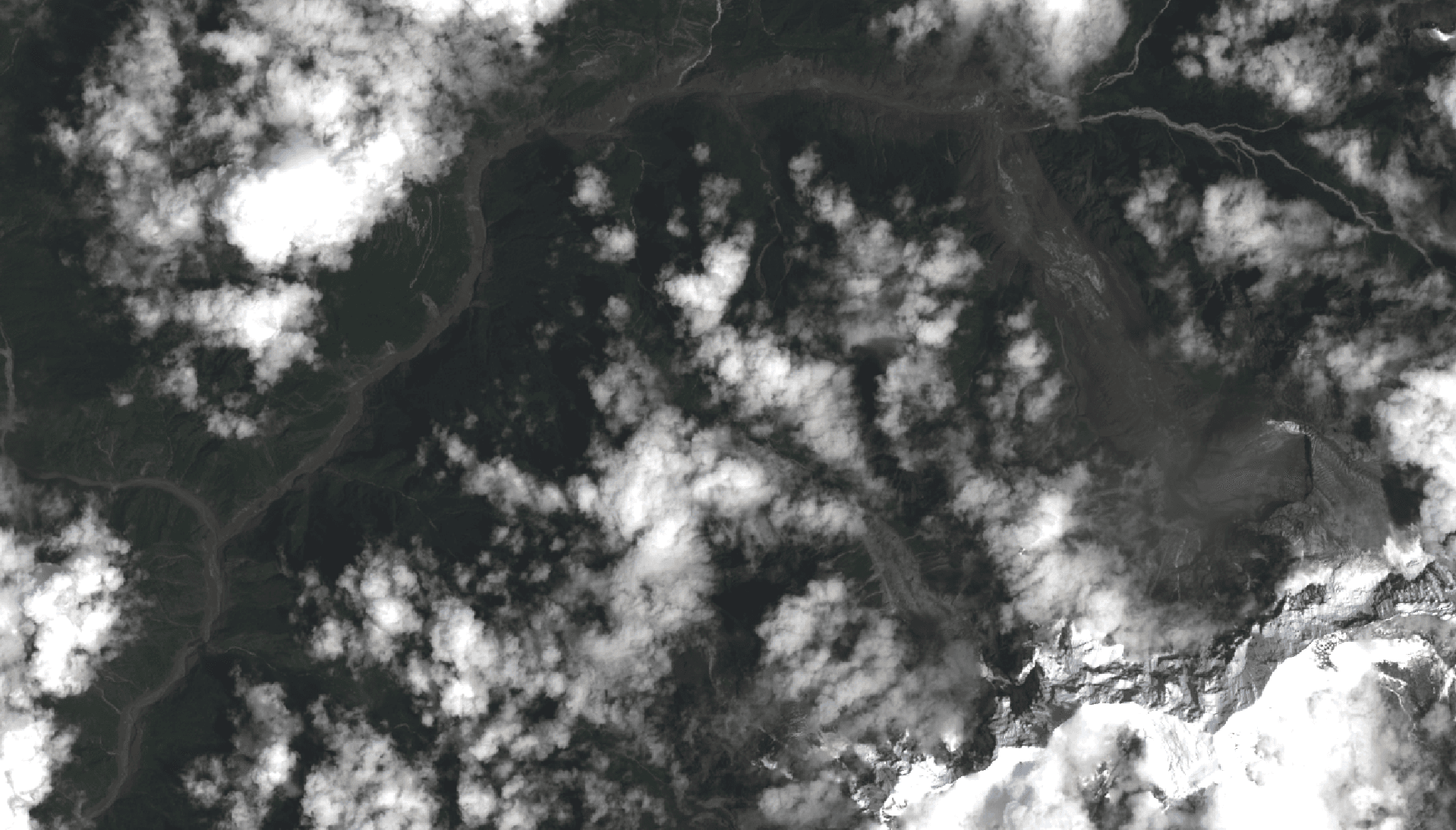
The flood began when a glacial collapse on the Nepal-Tibet border sent ice, rock and mud into the river system around 10:59 Nepal time. The surge wiped out stretches of the Gyirong Port crossing, the Friendship Bridge approaches, and riverside settlements in Rasuwa and Nuwakot. Hydropower sites along the Trishuli cascade took the heaviest industrial damage. Workers at Upper Trishuli-1, Trishuli 3A and 3B, Chilime and Langtang projects were inside tunnels and adits when the water arrived.
A barrier lake formed near the source after the first surge. Officials on both sides of the border have treated that lake as a second-strike risk. Roads that would normally carry heavy plant into the valleys remain cut. Helicopters have done most of the early lifts. The United Nations has said the Himalaya is warming about twice as fast as the global mean, which is shrinking glaciers and raising the chance of this kind of outburst.
The tunnel work
Home Minister Sudan Gurung said last week that rescuers had drilled a small opening into the upper part of a mud-filled tunnel at Trishuli 3A, pumped air and sent a camera through. That opening is what later let the army reach Shah and Maharjan. Indian tunnel specialists joined the Nepal Army at Chilime and Langtang. One body was recovered from a Langtang-side tunnel earlier in the week.
Hundreds of workers had already been brought out of other headings in the first days. The remaining problem is the headings that filled completely. There is no reliable count of how many people were on shift when the surge arrived. Contractors at the under-construction Upper Trishuli-1 site had earlier said more than 100 people could still be inside that single heading.
The diplomatic edge
Nepal's foreign minister, Shisir Khanal, used the disaster to ask the United States, China and India, as the three largest emitters, for compensation. Jaiswal answered on 4 September that climate change is a "common challenge" and that developed countries which have historically emitted the most should lead the search for a solution. He did not accept a bilateral compensation claim.
China has kept its published Tibet death figure low relative to the missing list. Earlier Chinese briefings put 546 people missing in Gyirong, including 261 foreigners from 23 countries. Those foreign missing lists have included Nepalis, Indians, Latvians, Americans and Britons. Identification across two jurisdictions and two languages is slow.
What is still open
The search is now in its second week. Bodies continue to turn up downstream, some of them possibly carried toward India. Families are waiting on DNA matches. The hydropower cascade that feeds the central grid has lost multiple plants at once. Reopening the Rasuwagadhi-Gyirong trade gate will take longer than a debris-clearing job because the port infrastructure itself was stripped.
Shah and Maharjan's exit does not close the tunnel file. It shows that air pockets lasted nine days in at least one heading. That is the fact rescuers will use to keep drilling.
Continue reading
 News
NewsCrew-13 lifts off at 11:10 a.m. with a docking aimed at the fastest US arrival
Almanaque Digital DeskCape Canaveral
- News
Datafolha puts Lula four points ahead of Flavio Bolsonaro, and the runoff inside the margin
Almanaque Digital DeskSao Paulo
- News
Chinese refiners hold October fuel exports, and Singapore diesel jumps then fades