ISRO returns on 4 September with EOS-05, India's first imaging satellite for geosynchronous orbit
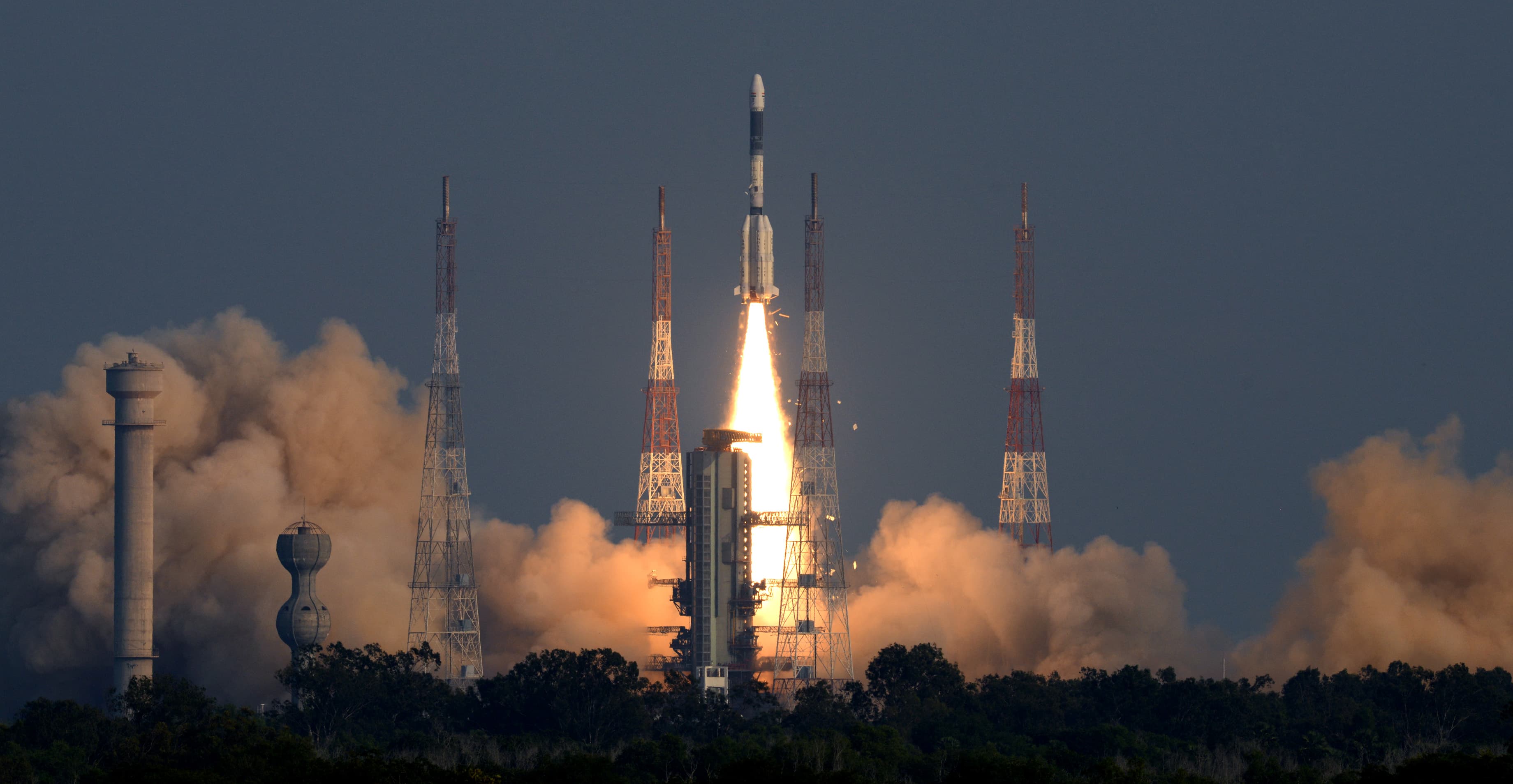
GSLV-F17 is due off the Second Launch Pad at 2:55 a.m. IST. The 19th GSLV flight will put GISAT-1A into a Sub-GTO after a seven-month pause that began with the failed PSLV-C62 mission in January.

Sriharikota3 min read
Last updated
The Indian Space Research Organisation has set 2:55 a.m. IST on 4 September for GSLV-F17 to leave the Second Launch Pad at Satish Dhawan Space Centre in Sriharikota. The payload is EOS-05, also listed as GISAT-1A. If the flight holds, it will be India's first imaging satellite intended to work from geosynchronous orbit, about 36,000 kilometres above the Earth.
ISRO has said the live stream will start at 2:25 a.m. Visitors who register at the Launch View Gallery site can watch from the ground. The rocket is the 19th flight of the Geosynchronous Satellite Launch Vehicle. It will fly in the Mk II layout with a four-metre ogive composite fairing. The vehicle stands 51.7 metres and weighs about 420.5 tonnes at liftoff. The third stage is the indigenous cryogenic upper stage.
The first insertion target is not the final working orbit. GSLV-F17 is booked to place the spacecraft into a Sub-Geosynchronous Transfer Orbit. From that stepping-stone path the satellite will raise itself into geosynchronous station. That sequence is why the agency talks about two different altitudes in the same briefing note.
What geosynchronous imaging changes
Most of India's remote-sensing fleet still works from low Earth orbit. Those satellites cross a given patch of ground on a schedule measured in days, not minutes. A geosynchronous imager stays over the same broad region as the Earth turns. Under cloud-free conditions, the GISAT design is meant to return a selected field image about every five minutes and a picture of the full Indian landmass about every 30 minutes, at 42 metres spatial resolution.
The spacecraft carries a 700 millimetre Ritchey-Chrétien telescope derived from the Cartosat-2A design, with array detectors in visible and near-infrared and short-wave infrared bands, plus an electronically steerable phased-array antenna. ISRO has described a high-agility, low-jitter platform. The point of that combination is speed over a wide area, not the finest possible pixel on a single field.
Public briefings list the uses in plain terms: floods, cyclones, crop stress, forest fire fronts, and other events that move faster than a polar-orbit revisit. A later economic-times briefing also noted a standing view of border regions. That is a consequence of the orbit, not a separate classified payload announced this week.
A replacement, and a pause that lasted seven months
GISAT-1A is the replacement for GISAT-1, later renamed EOS-03. That earlier satellite was lost when GSLV-F10 failed in August 2021. The new craft has a listed mission life of ten years. Mass figures in public copy this week have not been identical. Wikipedia and some agency-linked pages still put the spacecraft near 1,117 kilograms. Several Indian news outlets this week have used about 2,367 kilograms. The desk is recording both published figures until ISRO's mission booklet for F17 settles the number.
The launch also ends a gap. ISRO's last attempt this year was PSLV-C62 / EOS-N1 on 12 January. That flight failed. Since then the agency has not put a satellite on a rocket from Sriharikota. Another satellite already at the spaceport, NVS-03, is spoken of for November. F17 is the return to flight.
GSLV's own record is mixed. Family flights through mid-2025 stood at 18 attempts with 12 successes, four failures and two partial failures. F17 will be counted as the 19th. The cryogenic upper stage is now a standard Indian product, but each flight still tests that stage under a live payload.
How to watch, and what happens after liftoff
Registration for the free Launch View Gallery is through lvg.shar.gov.in. A government identity card is required. The agency's own stream is the official feed for people who will not travel to the island.
Success on 4 September would not mean pictures the same morning. The satellite still has to finish the climb from Sub-GTO, deploy antennas and testers, and complete on-orbit checks. Only after that would the five-minute and thirty-minute imaging cycle begin to matter for the disaster and agriculture desks that have waited for a geosynchronous Indian imager since the 2021 loss.
The immediate question is narrower. Can GSLV put a heavy imaging payload on the transfer path at 2:55 a.m., after seven months of silence on the pad.
Continue reading
 News
NewsCrew-13 lifts off at 11:10 a.m. with a docking aimed at the fastest US arrival
Almanaque Digital DeskCape Canaveral
- News
Datafolha puts Lula four points ahead of Flavio Bolsonaro, and the runoff inside the margin
Almanaque Digital DeskSao Paulo
- News
Chinese refiners hold October fuel exports, and Singapore diesel jumps then fades