GSLV-F17 places EOS-05 in sub-GTO, giving India its first geosynchronous imager
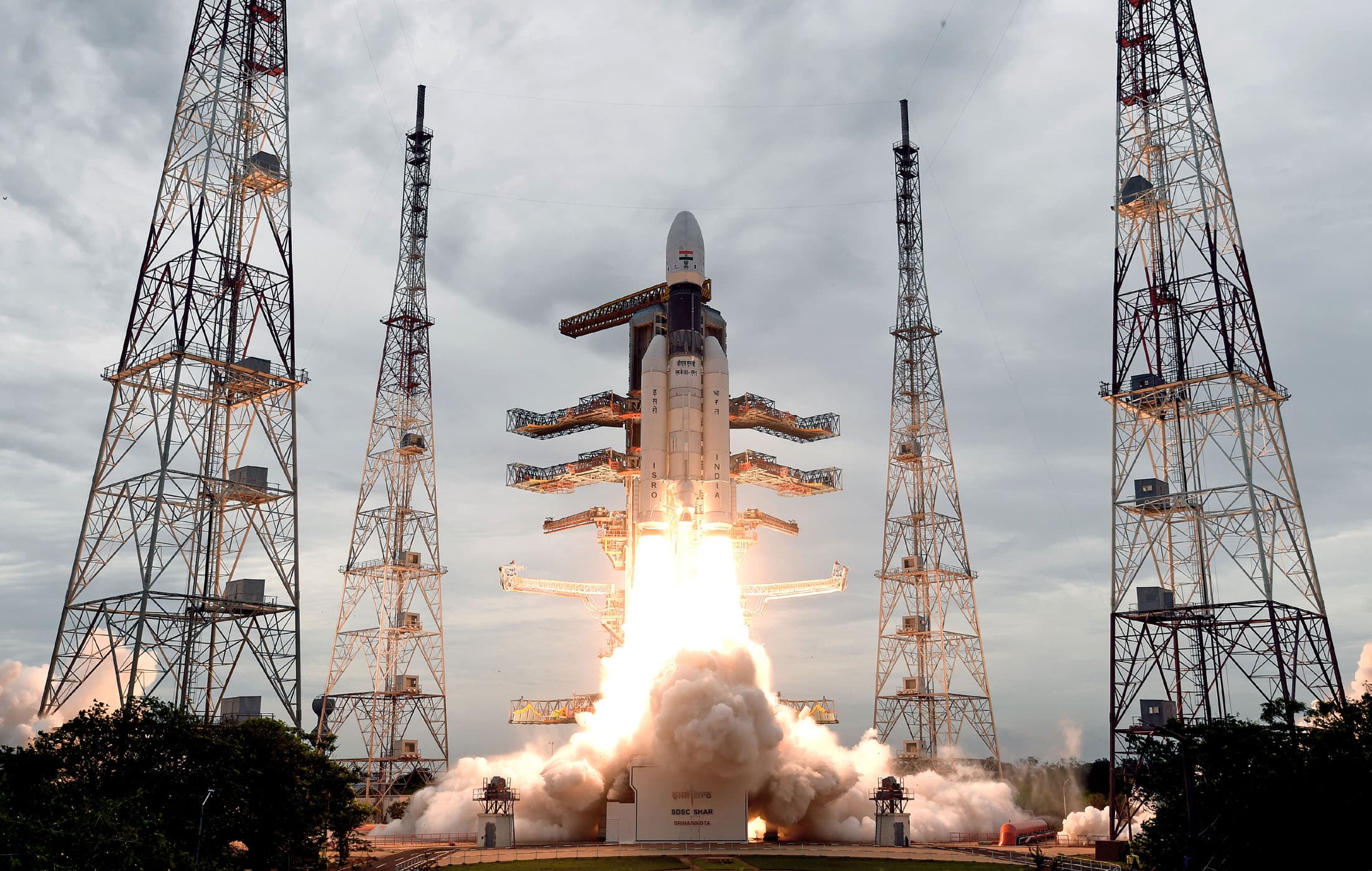
ISRO confirmed the 2:55 a.m. Friday liftoff from Sriharikota put the 2,367-kg EOS-05 into the planned sub-geosynchronous transfer orbit. The satellite is built to watch the same Indian region every few minutes from about 36,000 km.

Sriharikota3 min read
Last updated
ISRO said GSLV-F17 completed its job on Friday morning. The rocket left the Second Launch Pad at Satish Dhawan Space Centre, Sriharikota, at 02:55 IST and put EOS-05 into the intended sub-geosynchronous transfer orbit about 18 minutes later.
The flight was the 19th by India’s Geosynchronous Satellite Launch Vehicle. It used the four-metre ogive composite payload fairing. EOS-05 weighs about 2,367 kilograms. That makes it the heaviest Earth-observation satellite India has sent up so far, and the first Indian imager designed to work from geosynchronous orbit rather than from the low orbits used by the rest of the EOS fleet.
Low-Earth imagers pass over a given district only on scheduled tracks. EOS-05 is meant to sit near 36,000 kilometres, stay aligned with Earth’s rotation, and keep a large slice of the subcontinent in view. ISRO has said the payload can return to the same spot every five minutes and cover a wider Indian region in about half an hour. Those revisit times matter for cyclone watches, flood mapping, crop stress, forest fire fronts and any event that changes faster than a polar-orbit pass can follow.
The rocket did not drop the satellite into its final working slot. It delivered a sub-GTO. The spacecraft now has to raise and circularise that path with its own propulsion. That sequence is standard for geosynchronous missions and will take days, not hours. Until those burns finish, EOS-05 is a successful insertion, not yet an operational imager.
The launch also ended an eight-month gap in ISRO flights. The workhorse PSLV failed twice across 2025 and 2026 and has stayed grounded while investigators examine those flights. GSLV Mk II itself has a mixed record, which is why the agency and outside watchers treated F17 as a test of both the cryogenic upper stage and the schedule. Chairman V. Narayanan has separately said the first uncrewed Gaganyaan flight is still planned for this year. A clean GSLV insertion does not certify that crew vehicle. It does put a working heavy-lift stack back on the board after a quiet stretch.
EOS-05 is also known in older briefing notes as GISAT-1A, a follow-on to the GISAT-1 concept. The point of the architecture is persistence. A satellite that stares at the same weather system or border sector can feed agencies that cannot wait for the next Cartosat or Resourcesat pass. Defence users will watch the same geometry. Civil users will too. The public literature stresses disaster and resource mapping. The geometry works for both.
ISRO streamed the countdown from 02:25 IST. Official posts after insertion showed the vehicle leaving the pad and later confirmed that the satellite was in the planned orbit. No anomaly in the three solid strap-ons, the liquid core or the cryogenic upper stage was reported in the first official notes.
What happens next is unglamorous and decisive. Controllers will check power, thermal control, payload cover and the imaging chain while the orbit is raised. If the satellite reaches geosynchronous altitude and the camera works, India will have a standing view it has never owned. If the raising burns or the instrument fail, F17 will still count as a launcher success and a payload loss. Those two outcomes should not be mixed.
The mission also sits in a crowded neighbourhood. China, the United States, Japan and Europe already fly geosynchronous weather and early-warning craft. India’s gap has been the lack of a dedicated high-orbit imager of its own. EOS-05 is the first attempt to close that gap with a national satellite rather than purchased data.
For now the verified facts are narrow and enough. The rocket flew. The mass reached the intended transfer orbit. The first Indian geosynchronous imager is on its way to the altitude where that label becomes true.
Continue reading
 News
NewsCrew-13 lifts off at 11:10 a.m. with a docking aimed at the fastest US arrival
Almanaque Digital DeskCape Canaveral
- News
Datafolha puts Lula four points ahead of Flavio Bolsonaro, and the runoff inside the margin
Almanaque Digital DeskSao Paulo
- News
Chinese refiners hold October fuel exports, and Singapore diesel jumps then fades