Gloria Steinem dies at 92 in New York, days before a planned memoir
The writer and organiser who co-founded Ms. magazine died on 2 September at her Upper East Side home. A statement posted the next morning said she had kept working for equality until the end. A memoir was scheduled for this autumn.

New York4 min read
Last updated
Gloria Steinem died on Wednesday, 2 September, at her home in New York City. She was 92. A statement posted on Thursday to her Instagram account and to the page of her foundation said she had “passed away peacefully” and was “surrounded by some of the many who loved her.”
The same statement added that her “near-century on earth were years well-lived, and she continued working for equality until the very end.” It named listening as her greatest gift and said her example “gave people permission to be their truest selves.” She had been in declining health. A memoir she had recently finished was set for release this autumn.
Steinem was born Gloria Marie Steinem on 25 March 1934 in Toledo, Ohio. Her father, Leo, was a travelling salesman. Her mother, Ruth, had worked as a journalist before illness and the collapse of the family’s finances left her isolated. Steinem later wrote that those years taught her what happens when a capable woman is cut off from paid work and from other women. She graduated from Smith College in 1956.
Her early reporting did not look like movement work. In 1963 she published an account of working undercover as a Playboy Bunny at the New York club. The piece, for Show magazine, described the wages, the medical checks and the way the job was sold as glamour. Editors still assigned her fashion and lifestyle copy. That pattern broke when Clay Felker hired her at New York magazine. There she wrote political columns and, in 1969, “After Black Power, Women’s Liberation,” a report from a meeting that treated the new women’s groups as a political fact rather than a curiosity.
In 1971 she joined Dorothy Pitman Hughes, Betty Friedan, Bella Abzug and others in founding the National Women’s Political Caucus. The next year she and a group of editors launched Ms. magazine. The first standalone issue sold out in eight days. The title itself was an argument: that a woman’s public name need not record her marital status. Ms. published work on domestic violence, workplace law, and abortion at a time when those subjects were still treated as private misfortune.
Steinem’s public case for abortion rights was personal and specific. She had an abortion in London at 22, before Roe v. Wade. On NBC’s Meet the Press in 1972 she put the claim in civic language: “The wish of the average citizen, male and female, is not to have government intervention in that most private area of personal freedom.” After the Supreme Court overturned Roe in 2022 she kept the same line. She treated the vote, the paycheck and control of fertility as linked instruments, not separate causes.
She spent most of her working life on the road. College gyms, union halls, church basements and later the Women’s March in Washington in January 2017 were the venues. She co-founded the Ms. Foundation for Women, Voters for Choice, the Women’s Media Center, and, for work outside the United States, Equality Now. In 2000 she married David Bale, a businessman and the father of the actor Christian Bale. He died of brain lymphoma in 2003. She often said she had married late because the legal and social terms of marriage had, for most of her adult life, been a bad bargain.
Her Jewish paternal grandmother, Pauline Perlmutter Steinem, had been a suffrage campaigner in Ohio and had helped relatives leave Europe before and during the Holocaust. Steinem kept that lineage in view. She also kept a running argument with parts of the left that treated sex-based oppression as a secondary file. The books that carried the argument include Outrageous Acts and Everyday Rebellions (1983), Revolution from Within (1992), and My Life on the Road (2015).
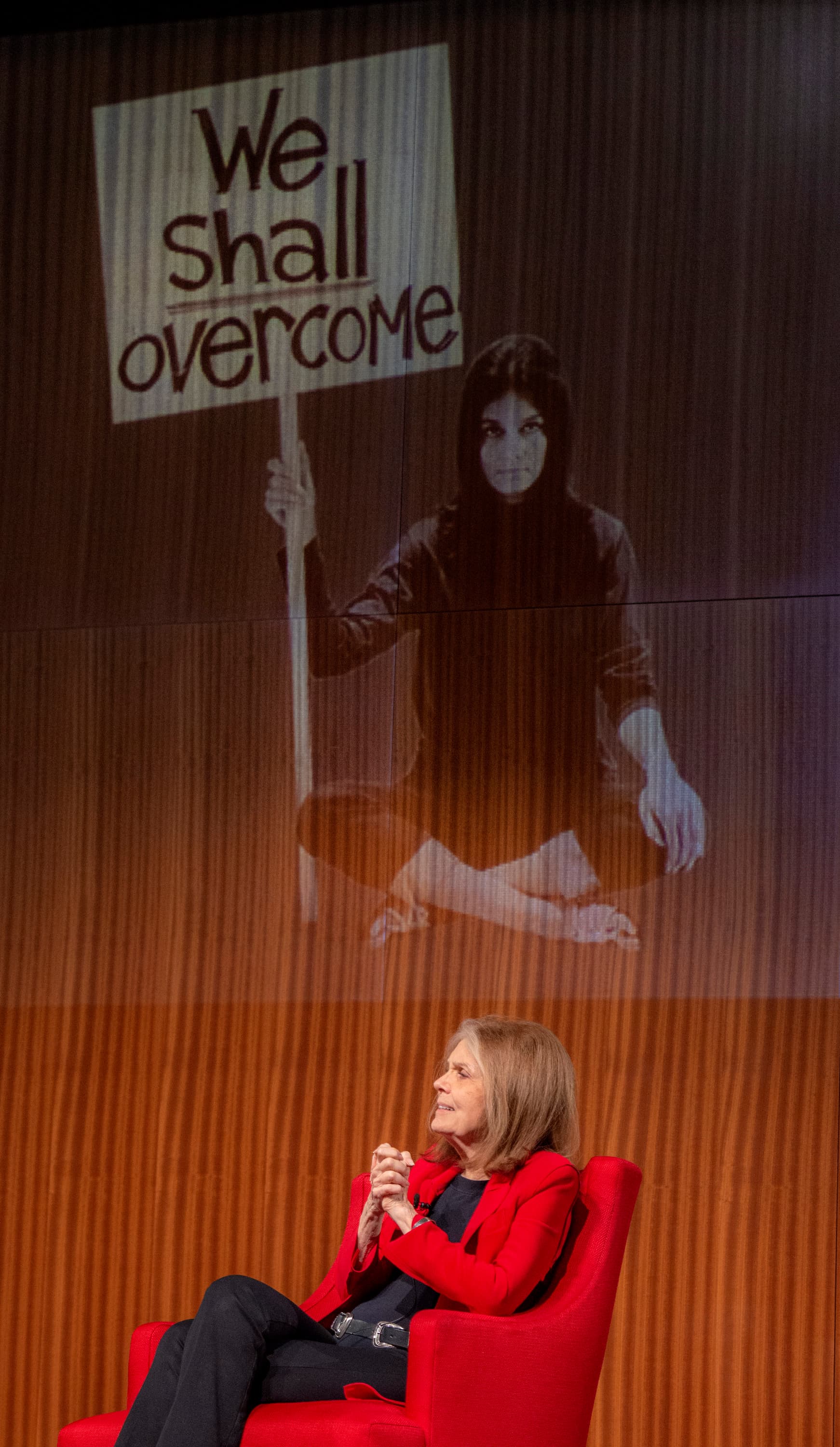
In a 2015 interview with Terry Gross on Fresh Air she described old age as a phase in which “you can do what you want.” In a 2005 “This I Believe” essay for NPR she wrote that “a unique core self is born into every human being.” Those late statements match the Thursday Instagram note more closely than the poster image of the 1970s. She hosted talking circles in her apartment into her nineties.
Tributes on 3 September came from Hillary Clinton, from members of Congress, and from writers who had grown up with Ms. on the kitchen table. The New York Times published a previously unseen interview in which she discussed the London abortion and her decision to marry. Jill Filipovic wrote that a doctor in that clinic had asked Steinem to promise two things: that she would not tell anyone, and that she would do what she wanted with her life.
What remains unsettled is not her fame. It is whether the institutions she built can still move votes and courts in a country where abortion law is again a state matter and where the magazine she helped found reaches a smaller print audience than it did in 1972. The memoir due this autumn will be read against that test. The statement from her house said she kept working until the end. The work now sits with the groups that still use her name on the letterhead.
Continue reading
 News
NewsSettlers kill Mashour Yassin, 51, at his home on the edge of Yasuf
Almanaque Digital DeskYasuf
- News
Pakistan says 22 fighters died in Kunar and Helmand; the UN counts 10 civilians
Almanaque Digital DeskKabul
- News
Tennessee pauses executions after Christa Pike survives two doses of pentobarbital
Almanaque Digital Desk