Doval meets China's Han Zheng as India and China hold 25th border talks in Beijing
National Security Advisor Ajit Doval discussed border peace and broader ties with Chinese Vice President Han Zheng ahead of Special Representatives talks with Wang Yi, timed before Xi Jinping's expected BRICS visit to India.

Beijing1 min read
Last updated
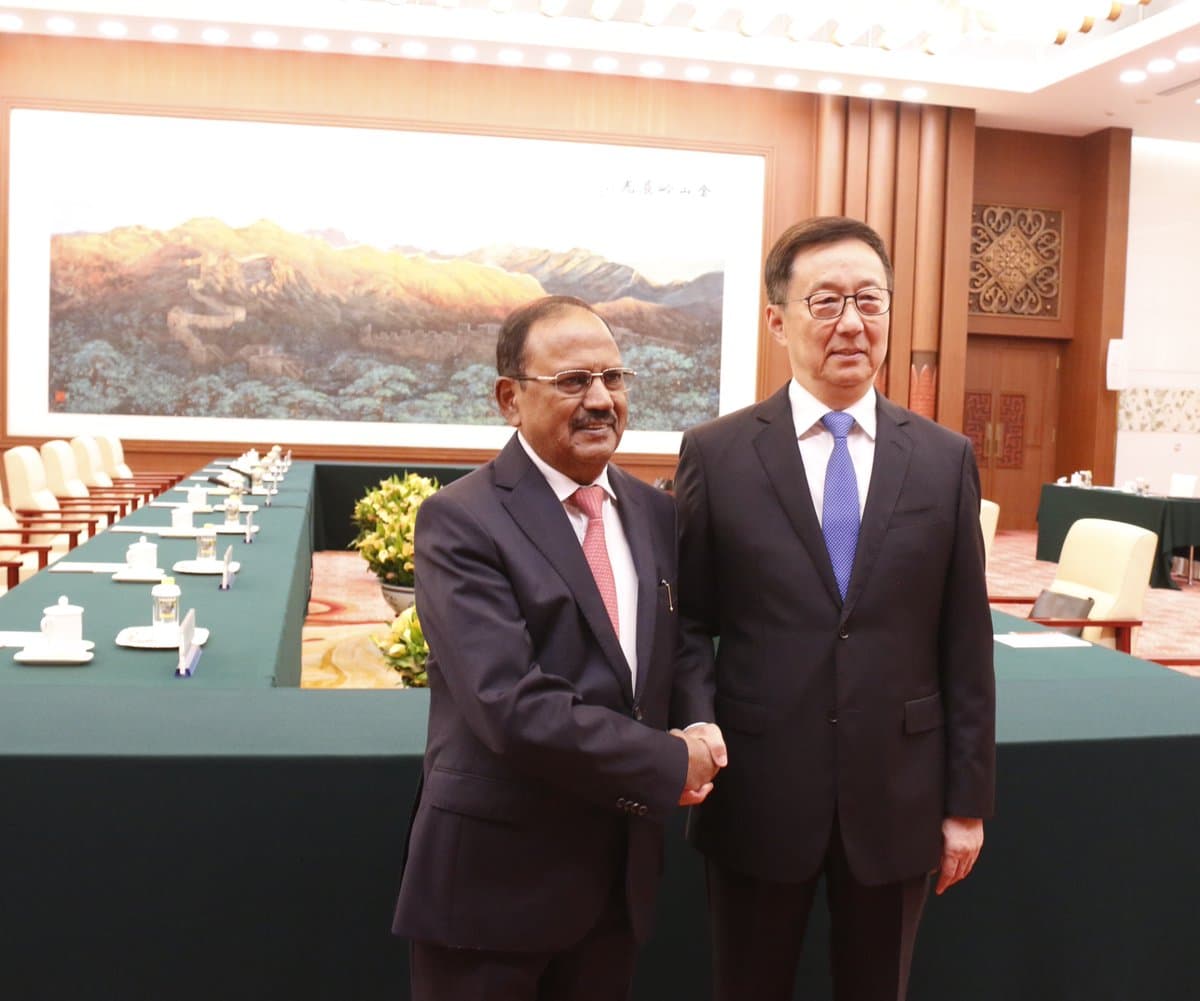
National Security Advisor Ajit Doval met Chinese Vice President Han Zheng in Beijing on Tuesday before the 25th round of Special Representatives talks on the India-China boundary question.
The Indian Embassy in Beijing said the two discussed ways to strengthen peace and tranquillity in the border areas and improve bilateral relations across economic, political and multilateral forums. The talks followed the consensus reached between the leaders of the two countries.
Doval, India's Special Representative on the boundary question, is set to co-chair the formal session with Chinese Foreign Minister Wang Yi, who holds the same role for China and sits on the Politburo. Chinese Foreign Ministry spokesperson Lin Jian described the Special Representatives mechanism as the main channel for boundary negotiations and an important platform for communication on mutual interests.
The meeting comes weeks before Chinese President Xi Jinping is expected to visit India for the BRICS Summit in September, his first trip to the country in seven years. Both sides have framed the current round as an opportunity to institutionalise stability along the Line of Actual Control even as structural differences remain, according to Chinese strategic affairs scholar Hu Shisheng.
An August Working Mechanism for Consultation and Coordination meeting had already reviewed the situation along the LAC. Officials expect discussion of confidence-building measures, border management structures and a possible review of earlier disengagement arrangements.
The boundary dispute spans roughly 3,488 kilometres. The Special Representatives process, established in 2003, has not produced a final settlement but continues to serve as the primary structured forum for managing tensions.
Continue reading
 Geopolitics
EU Imports Record 12.18 Million Tonnes of Russian Arctic LNG Worth €7.88 Billion
Almanaque Digital DeskBrussels
- News
Landslide-Triggered Flood Sweeps Houses and Bridges on Nepal’s Budhi Gandaki
Almanaque Digital DeskGorkha, Nepal
- News
RSF Drone Strike Kills at Least 30 Near Displacement Camp in Sudan’s Blue Nile