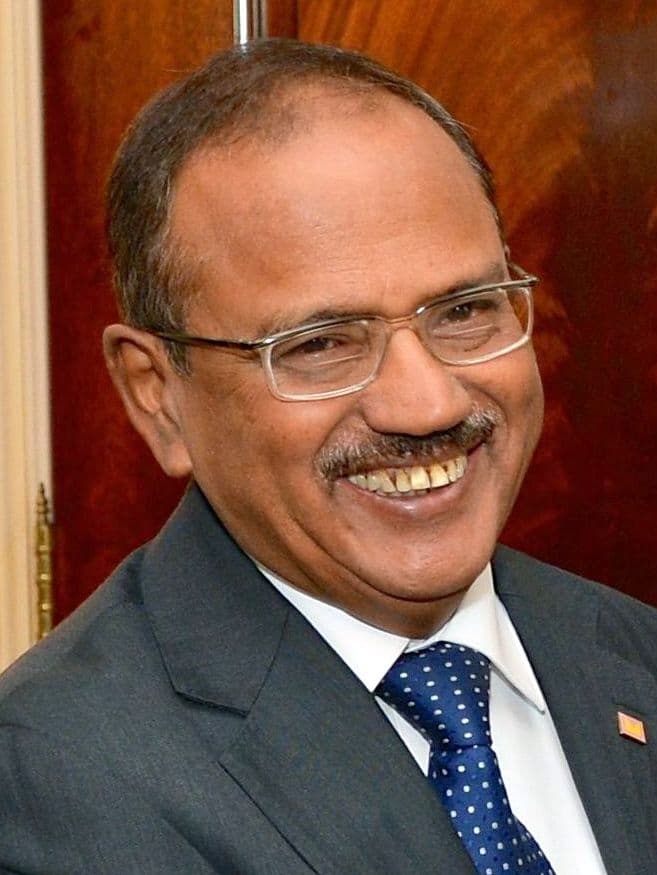
Doval and Wang open 25th round of India-China border talks in Beijing
National Security Advisor Ajit Doval met Chinese Foreign Minister Wang Yi and earlier Vice President Han Zheng as the two sides seek to lock in border stability ahead of a possible Xi Jinping visit for the BRICS summit.

Beijing2 min read
Last updated
Beijing, August 25, 2026 — India’s National Security Advisor Ajit Doval and Chinese Foreign Minister Wang Yi opened the 25th round of Special Representatives talks on the boundary question in Beijing on Tuesday. The meeting forms the main formal channel for managing the 3,488-kilometre disputed border.
Earlier in the day Doval called on Chinese Vice President Han Zheng. The two discussed ways to strengthen peace and tranquillity along the Line of Actual Control and to improve bilateral relations across economic, political and multilateral tracks. Han urged both countries to view the relationship from a strategic and long-term perspective and to implement the consensus reached by their leaders.
Doval told his counterpart that India and China, as the world’s two most populous and fastest-growing major economies, hold a historic opportunity for cooperation. He said India stands ready to deepen mutually beneficial ties while properly addressing the boundary question.
The talks come weeks before Chinese President Xi Jinping is expected in New Delhi for the BRICS summit in mid-September, his first visit to India in seven years. Officials on both sides treat the Special Representatives mechanism as a stabilising tool even though it has not produced a final boundary settlement.
Chinese Foreign Ministry spokesperson Lin Jian described the channel as the principal platform for boundary negotiations and for communication on issues of mutual interest. The agenda is expected to cover confidence-building measures, review of earlier disengagement arrangements, and the practical management of patrolling rights along the LAC.
Relations deteriorated sharply after the 2020 clash in eastern Ladakh. Multiple rounds of military and diplomatic talks since then have reduced the temperature but left core differences unresolved. Both capitals now appear focused on preventing any new incident that could disrupt the diplomatic calendar.
No joint statement had been issued by late afternoon. The two-day visit continues, and further details may emerge once the formal sessions conclude. For the moment the public message from both sides stresses institutionalised stability and the need to keep the border quiet while larger economic and multilateral cooperation is explored.