Doval and Wang Hold 25th Round of Boundary Talks in Beijing
India's National Security Advisor meets Chinese Foreign Minister and Vice President ahead of Xi Jinping's expected BRICS visit, focusing on border stability and broader ties.

Beijing2 min read
Last updated
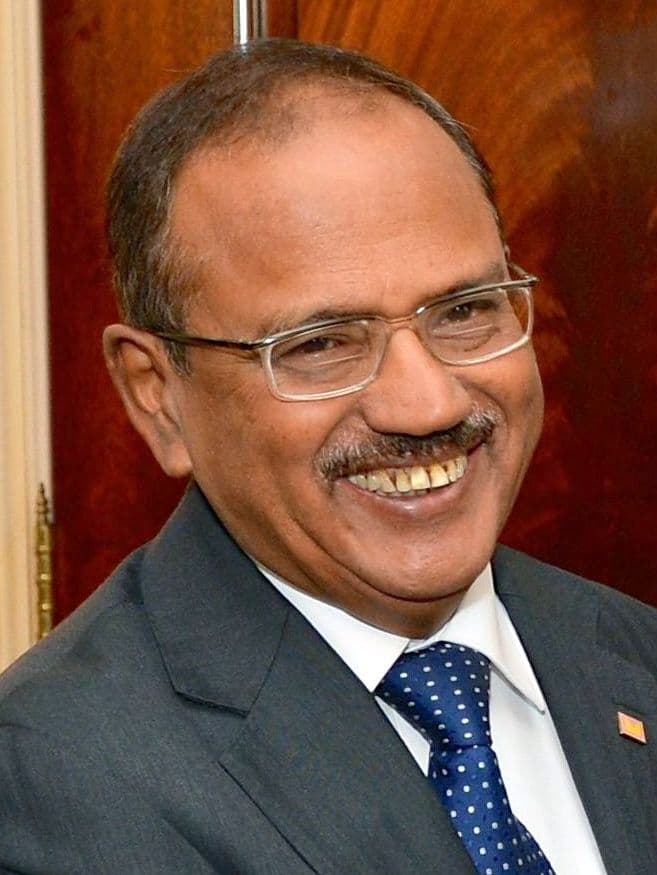
National Security Advisor Ajit Doval met Chinese Foreign Minister Wang Yi in Beijing on August 25 for the 25th round of Special Representatives talks on the India-China boundary question.
Earlier in the day Doval called on Chinese Vice President Han Zheng. The Indian Embassy in Beijing said the two discussed ways to strengthen peace and tranquillity in the border areas and to improve bilateral relations across economic, political and multilateral channels.
Han Zheng, according to Xinhua, told Doval that China and India should view relations from a strategic and long-term perspective and implement the consensus reached by their leaders.
The Special Representatives mechanism, established in 2003, remains the primary channel for addressing the 3,488-kilometre disputed boundary. Doval and Wang serve as the designated representatives for their respective governments.
The talks come ahead of Chinese President Xi Jinping's expected visit to India for the BRICS Summit on September 12-13, his first trip to the country in seven years. Both sides have treated the current round as an opportunity to take stock of the relationship before that engagement.
Relations deteriorated sharply after the 2020 Galwan Valley clash and the subsequent military standoff in eastern Ladakh. Multiple rounds of military and diplomatic talks since then have produced partial disengagement at some friction points, yet the overall boundary dispute remains unresolved.
Chinese Foreign Ministry spokesperson Lin Jian said earlier that the two sides would hold an in-depth discussion on the boundary question as well as bilateral, regional and international issues. He described the Special Representatives talks as the main channel for boundary negotiations and an important platform for communication on mutual concerns.
Indian officials have consistently linked progress on the boundary to the broader normalisation of ties. Economic engagement, people-to-people exchanges and multilateral cooperation have recovered unevenly since the 2024 meeting between Prime Minister Narendra Modi and Xi Jinping in Kazan.
No joint statement was immediately issued after the August 25 meetings. Both sides typically release carefully worded readouts that emphasise continuity and the desire for peace along the Line of Actual Control.
The timing is deliberate. A successful visit by Xi to New Delhi would mark a public signal that the two largest Asian powers can manage their differences while cooperating in forums such as BRICS. Failure to show movement on the boundary would leave the summit under a cloud of unresolved tension.
Doval's two-day visit also included discussions on regional and international issues of mutual interest. Officials on both sides have avoided public speculation about concrete outcomes, preferring to let the process continue without premature claims of breakthrough.
Continue reading
 Geopolitics
EU Imports Record 12.18 Million Tonnes of Russian Arctic LNG Worth €7.88 Billion
Almanaque Digital DeskBrussels
- News
Landslide-Triggered Flood Sweeps Houses and Bridges on Nepal’s Budhi Gandaki
Almanaque Digital DeskGorkha, Nepal
- News
RSF Drone Strike Kills at Least 30 Near Displacement Camp in Sudan’s Blue Nile