China's solar fleet edges past coal on installed capacity
The National Energy Administration put solar at 1,286 GW and coal at 1,285 GW at the end of July. Generation is a different story: solar supplied about 13 percent of power used in the first seven months, while coal's share of generation fell below 50 percent in the first half.

Beijing2 min read
Last updated
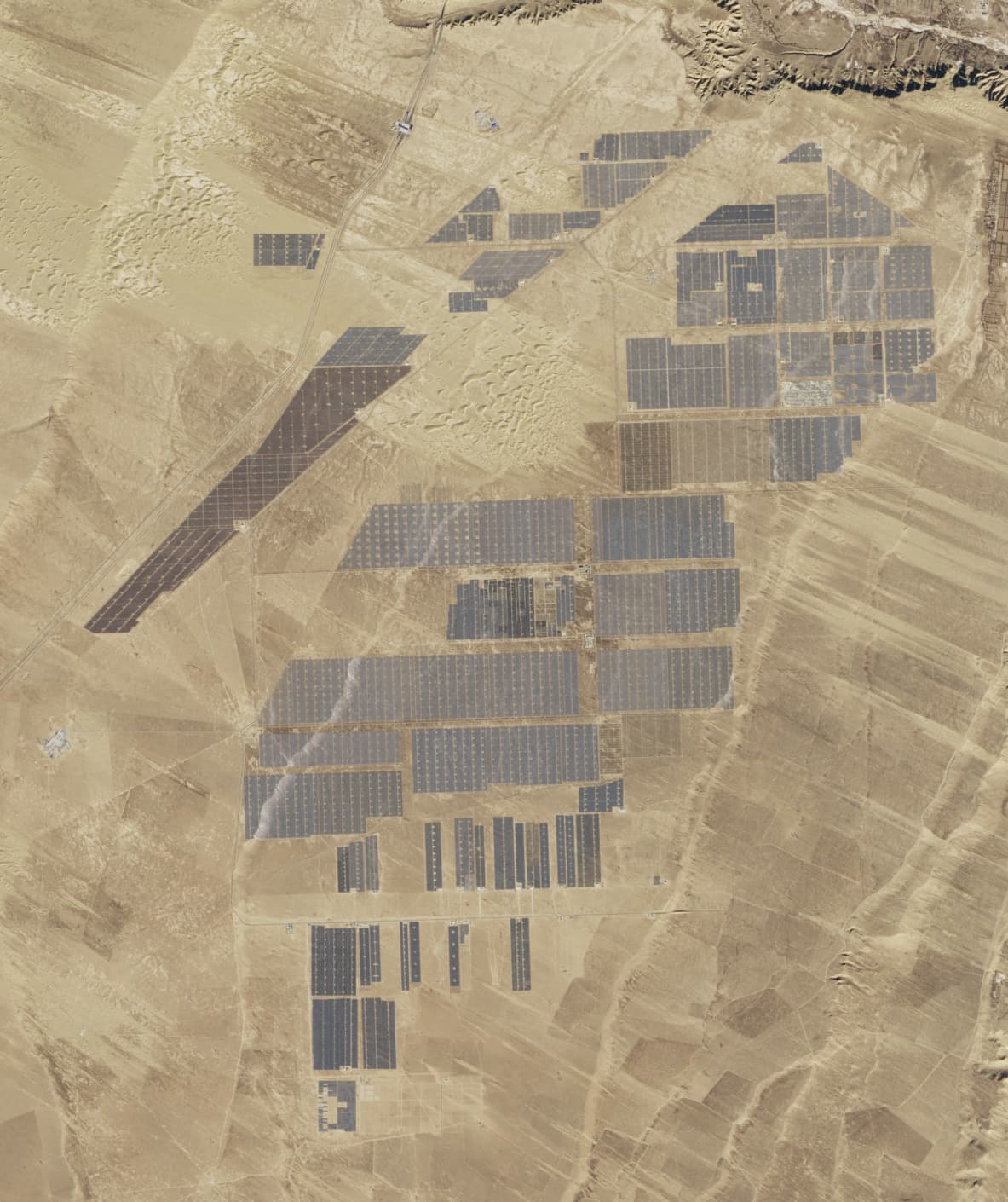
China's National Energy Administration said on 1 September that installed solar capacity reached 1.286 billion kilowatts by the end of July, one million kilowatts above the coal fleet at 1.285 billion. For the first time since China built a modern power system, photovoltaics are the largest category by nameplate capacity.
Nameplate capacity is not the same as electricity delivered. Solar panels sit idle at night and drop output under cloud and dust. Coal plants can run around the clock. That is why the same NEA figures show solar generation of 802.4 billion kilowatt-hours from January to July, up 15.5 percent from a year earlier, yet only about 13 percent of national consumption. Put differently, more than one kilowatt-hour in eight used in China now comes from solar. Seven still come from somewhere else.
Coal's share of generation did fall below 50 percent in the first half of 2026, according to the administration. Combined wind and solar supplied 24.6 percent in that half. Renewables as a group generated 41.2 percent of electricity in the first six months, crossing 40 percent for the first time. Those are generation numbers, and they matter more for emissions than the capacity ranking.
The solar stock is split 704 gigawatts utility-scale and 582 gigawatts distributed, meaning rooftop and other smaller arrays close to load. China now has more installed solar than the United States, India and Germany combined, and more than the European Union as a bloc. The China Electricity Council had already flagged in June that solar was only about one gigawatt behind coal.
The milestone arrived after the boom slowed. China added 86 gigawatts of solar in the first seven months of 2026. In May 2025 alone it added 93 gigawatts, the last month before Beijing ended guaranteed fixed prices for new wind and solar and moved projects onto market pricing. Developers rushed connections before the rule change. This year's slower pace is the hangover from that rush, not a collapse of the industry. State media still project more than 2 trillion yuan of solar-chain investment over the next five years.
China remains the largest greenhouse-gas emitter. It has pledged a carbon-emissions peak by 2030 and carbon neutrality by 2060. A solar-heavy grid that still leans on coal at night does not, by itself, meet those dates. It does change the planning problem. Grid operators now have to move daytime surplus west-to-east and store it, or keep coal plants on standby as peakers. That is a different machine from the coal-baseload system that ran the country for three decades.
The political reading writes itself and should be resisted. Capacity leadership is a planning statistic. Generation share is the climate statistic. Curtailment, storage and transmission will decide whether the extra panels cut coal hours or simply sit on the desert. The NEA announcement is still a real crossing. For the first time the country's largest block of installed power equipment is a technology that produces nothing after sunset. The next figures to watch are night-time coal dispatch and the storage queue, not the next gigawatt of panels.
Continue reading
 News
NewsCrew-13 lifts off at 11:10 a.m. with a docking aimed at the fastest US arrival
Almanaque Digital DeskCape Canaveral
- News
Datafolha puts Lula four points ahead of Flavio Bolsonaro, and the runoff inside the margin
Almanaque Digital DeskSao Paulo
- News
Chinese refiners hold October fuel exports, and Singapore diesel jumps then fades