BepiColombo drops its transfer module and starts the fall toward Mercury
ESA confirmed the 3 September separation after a two-hour wait for radio. Capture is due on 21 November. The two science orbiters split in December and begin joint work in April 2027.

Darmstadt3 min read
Last updated
BepiColombo shed its Mercury Transfer Module on Thursday, 3 September, and began the last, slow fall toward the planet. The command left Darmstadt at 14:00 CEST. The radio confirmation that the stack had come apart, and that the two science orbiters were stable, reached the European Space Operations Centre nearly two hours later, at 13:53 GMT. Elsa Montagnon, who runs module operations at ESA, called it the best case: telemetry on the minute it was due.
The mission left Earth in October 2018. It is a joint flight of ESA's Mercury Planetary Orbiter and JAXA's Mercury Magnetospheric Orbiter, Mio, pushed across the inner solar system by the European transfer module's solar-electric thrusters. Those thrusters were shut down for good on 15 June after a final burn. A power shortfall years earlier had already forced a one-year delay. Arrival, once planned for 2025, is now a 2026 sequence.
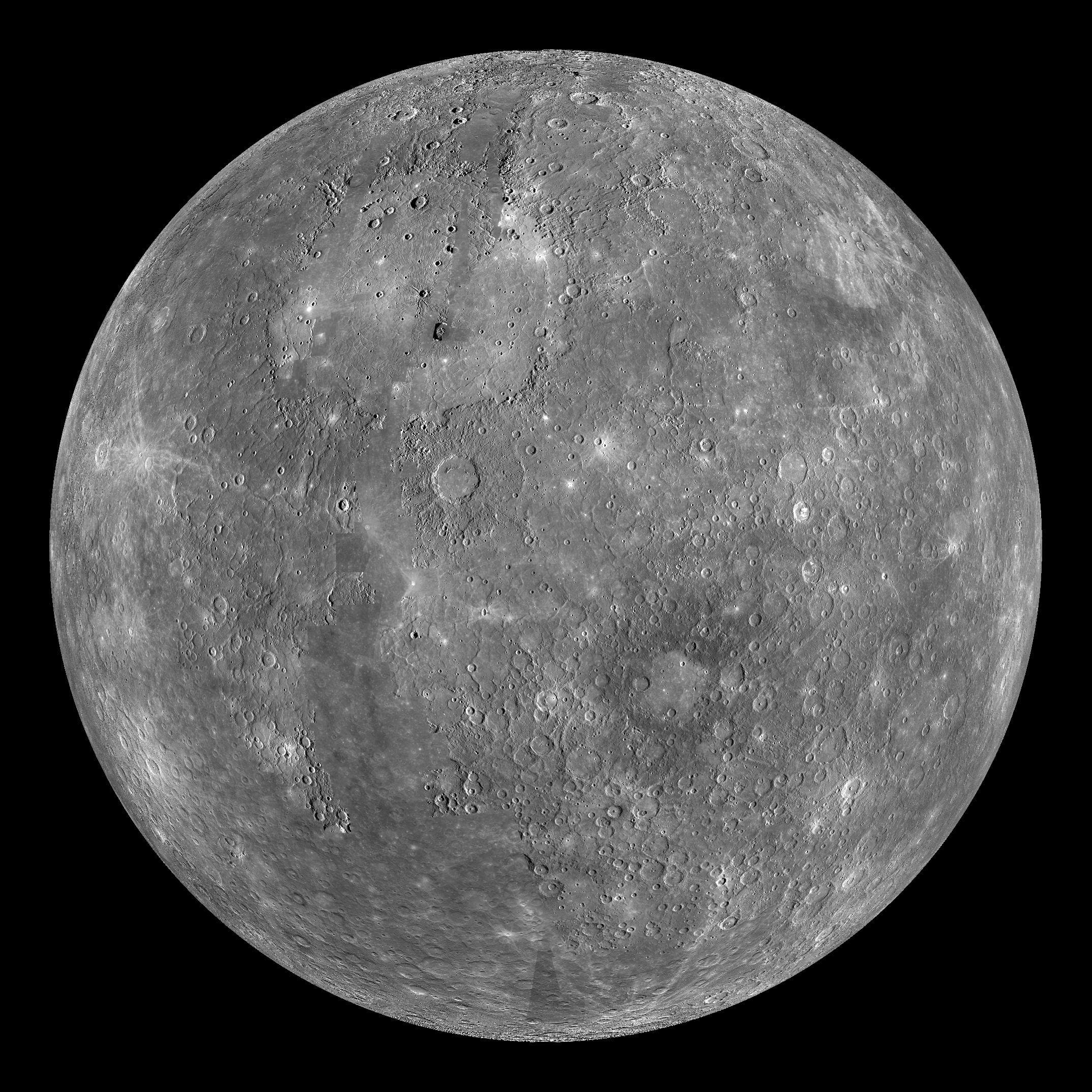
Getting to Mercury is a navigation problem disguised as a spacecraft. The planet is small, only a little larger than the Moon, and it sits deep in the Sun's gravity well. Approach too fast and the ship either hits the surface or is flung into a solar orbit it cannot correct. Approach too slow and the same well wins. BepiColombo spent eight years stealing speed from Earth, Venus and Mercury itself in a chain of flybys. Six Mercury flybys are already in the log. The remaining work is capture.
On 21 November the paired orbiters are due to be caught into a wide orbit. On 9 or 10 December they are due to separate. Mio will take a high path through Mercury's magnetic bubble. The European orbiter will drop toward a lower mapping orbit, reaching its science path in March 2027. Joint science is scheduled to start in April 2027. That is the first time Europe or Japan will have a working spacecraft at Mercury. Only NASA's MESSENGER has orbited the planet before.
Thursday's separation speed was 40 centimetres a second. In planetary terms the two pieces are still next to each other. In human terms they are on different futures. The transfer module is now a drifting hull. The orbiters carry a sunshield and the chemical thrusters that will do the capture burn. At the moment of separation the stack was about 2.1 million miles from Mercury and some 200 million kilometres from Earth. Mercury itself sat about 63 million kilometres from the Sun. Light-time made live flying impossible. Every command on 3 September had been loaded in advance.
ESA called the arrival one of the hardest operational sequences it has ever attempted. That is not advertising. The agency has to fly two orbiters as one object into a weak gravity field, split them without collision, and then keep both alive in a thermal environment that can cook unshielded metal. MESSENGER solved a simpler version of the same problem with one ship and a different trajectory. BepiColombo is doing it with two agencies, two attitude systems and a transfer stage that has now been thrown away.
Science goals are old and still open. Mercury has a magnetic field it should not have if the interior is as dead as the textbooks once assumed. The surface is darker and chemically stranger than the Moon. There is water ice in polar craters that never see the Sun. Mio is built to sit in the magnetosphere and watch it breathe. MPO is built to map the crust and sense the core. April 2027 is when those instruments start their working life.
For now the news is smaller and more exact. A module that had pushed the stack since 2018 is gone. A signal that had to cross 200 million kilometres arrived on time. Two orbiters are flying toward a November capture burn with no electric thrust left to correct a large mistake. The next public date is 21 November. If that burn works, Mercury gets its second orbiter, and its first pair.
Continue reading
 News
NewsCrew-13 lifts off at 11:10 a.m. with a docking aimed at the fastest US arrival
Almanaque Digital DeskCape Canaveral
- News
Datafolha puts Lula four points ahead of Flavio Bolsonaro, and the runoff inside the margin
Almanaque Digital DeskSao Paulo
- News
Chinese refiners hold October fuel exports, and Singapore diesel jumps then fades