Ajit Doval and Wang Yi Hold 25th Round of India-China Boundary Talks in Beijing
National Security Advisor Ajit Doval met Chinese Vice President Han Zheng and Foreign Minister Wang Yi to discuss border stability and bilateral ties ahead of Xi Jinping’s expected BRICS visit.

Beijing2 min read
Last updated
National Security Advisor Ajit Doval held the 25th round of Special Representatives talks on the India-China boundary question with Chinese Foreign Minister Wang Yi in Beijing on 25 August 2026.
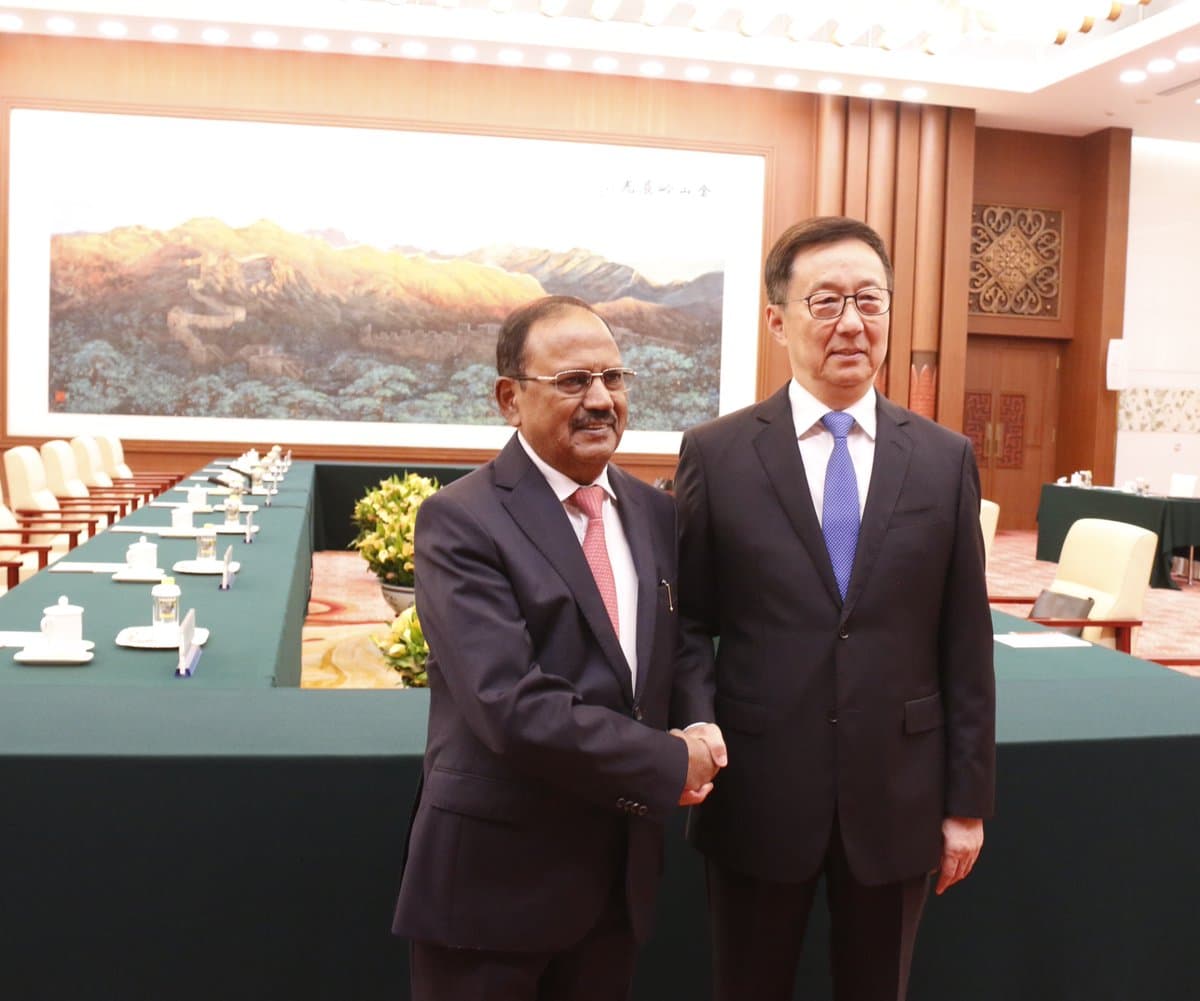
Before the formal session, Doval called on Chinese Vice President Han Zheng. The two discussed measures to strengthen peace and tranquillity along the 3,488 km border and to improve relations across economic, political and multilateral channels, consistent with the consensus reached by the leaders of both countries.
Han Zheng told Doval that China and India should approach the relationship from a strategic and long-term perspective and implement the consensus of their leaders. He called for greater strategic mutual trust, expanded cooperation, close coordination in multilateral settings, and proper management of differences.
Doval replied that the two countries, as the world’s most populous and fastest-growing major economies, have a historic opportunity for cooperation. India stands ready to deepen mutually beneficial ties, address the boundary question properly, and make further progress in bilateral relations.
The Special Representatives mechanism was established in 2003. Doval and Wang Yi are the designated representatives. The previous round took place in New Delhi a year earlier. Chinese officials have described the current border situation as generally stable following the 36th meeting of the Working Mechanism for Consultation and Coordination on border affairs.
The talks occur weeks before Chinese President Xi Jinping is expected to visit India for the BRICS summit in September, his first trip to the country in seven years. Both sides present the engagement as an effort to institutionalise stability even while structural differences remain.
Chinese strategic affairs scholar Hu Shisheng observed that the focus of the current round would be on institutionalising stability despite those structural differences. The boundary dispute itself has not been resolved, and differences over the status of Arunachal Pradesh continue to surface in official statements.
Indian officials have consistently linked the overall state of the bilateral relationship to conditions on the ground along the Line of Actual Control. The latest meetings keep the diplomatic channel open while military and diplomatic contacts continue to manage day-to-day friction.
Whether the round produces concrete steps toward a clearer understanding of the Line of Actual Control or new confidence-building measures will become clear only after both sides issue formal statements on the outcome.
Continue reading
 Geopolitics
EU Imports Record 12.18 Million Tonnes of Russian Arctic LNG Worth €7.88 Billion
Almanaque Digital DeskBrussels
- News
Landslide-Triggered Flood Sweeps Houses and Bridges on Nepal’s Budhi Gandaki
Almanaque Digital DeskGorkha, Nepal
- News
RSF Drone Strike Kills at Least 30 Near Displacement Camp in Sudan’s Blue Nile